


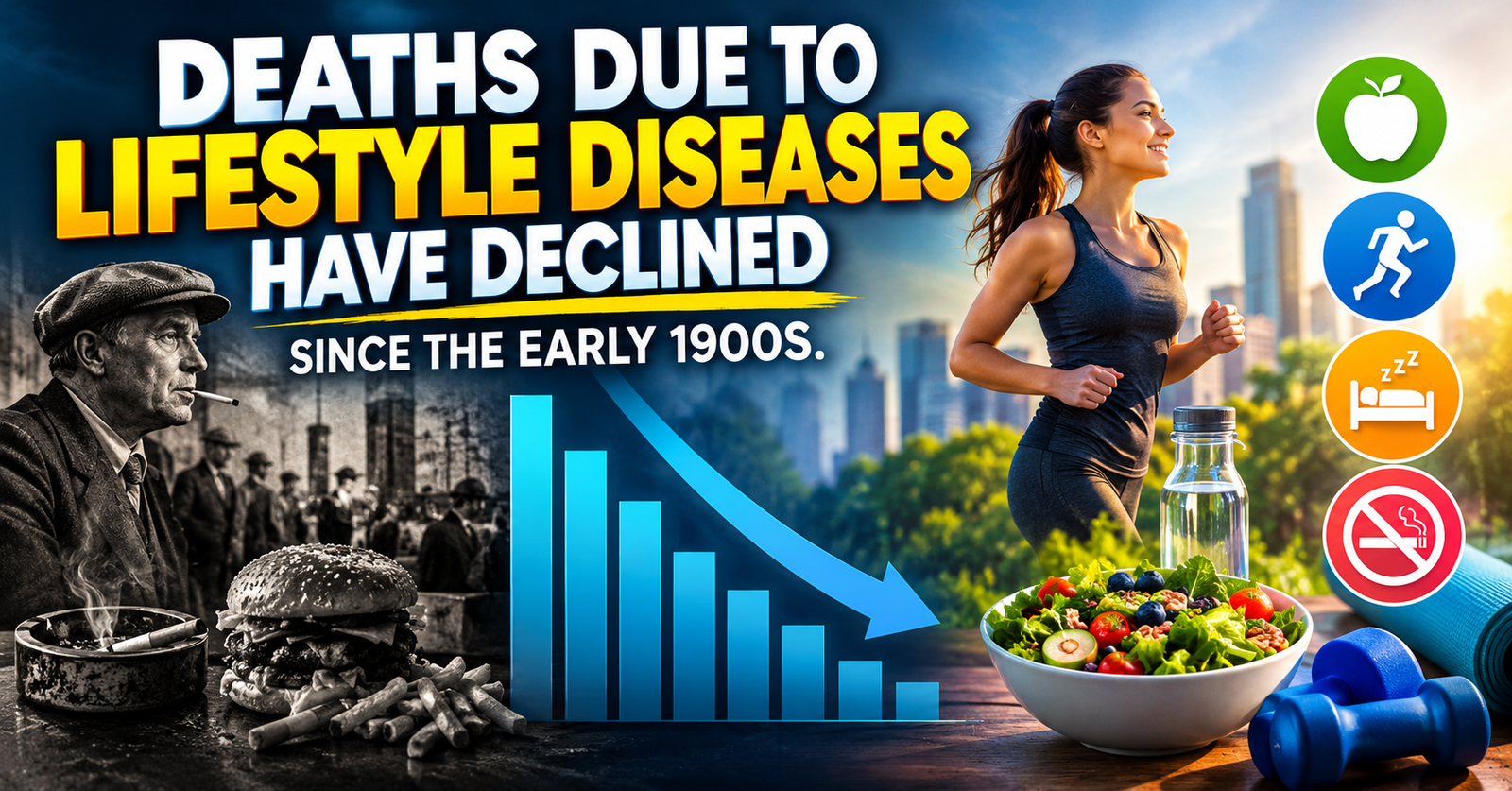
The statement “deaths due to lifestyle diseases have declined since the early 1900s” is misleading without further explanation. Death rates from some major diseases, especially cardiovascular conditions, have fallen significantly in recent decades. However, lifestyle-related illnesses remain leading causes of death worldwide. In fact, heart disease, cancer and diabetes account for a substantial share of modern health problems.
The key difference lies between the number of deaths and the rate of deaths. Although modern medicine has improved survival, ageing populations and changing lifestyles have increased the overall burden of many chronic diseases.
Understanding this distinction helps explain how public health has changed over the past century.
Have Deaths Due to Lifestyle Diseases Declined Since the Early 1900s?
The answer depends on the disease, country and measurement used.
During the early 1900s, infectious diseases caused a much larger share of deaths. Tuberculosis, pneumonia and other infections were major threats. However, improved sanitation, vaccination and medical treatment gradually reduced many of these risks.
As a result, more people survived childhood and lived into older age. Conditions such as heart disease, stroke and cancer became more prominent causes of death.
In the United Kingdom, age-standardised death rates from cardiovascular disease have fallen sharply since the late twentieth century. This measure adjusts for changes in the population’s age structure.
However, the total number of deaths does not always follow the same pattern. An ageing population can produce more deaths even when an individual’s age-related risk falls.
Therefore, claiming that all lifestyle-related deaths have declined since 1900 oversimplifies a complex history.
What Are Lifestyle Diseases?
Lifestyle diseases are health conditions linked partly to everyday habits and long-term behaviour.
Common examples include type 2 diabetes, cardiovascular disease, some cancers and chronic respiratory conditions.
Several factors can increase the risk of developing these illnesses. These include smoking, poor diet, physical inactivity and harmful alcohol consumption.
However, lifestyle choices are not the only causes. Genetics, ageing, environmental pollution, income and access to healthcare also influence disease risk.
For this reason, health professionals often use the term non-communicable diseases, or NCDs. These conditions generally do not spread directly between people.
Nevertheless, not every non-communicable disease results from lifestyle factors.
How Have Causes of Death Changed Since the Early 1900s?

Infectious Diseases Dominated Early Mortality
In the early twentieth century, infections were among the most serious public health threats.
Many households lacked modern sanitation, while effective treatments for bacterial infections were limited. Consequently, diseases that doctors can often treat today caused many deaths.
Clean drinking water, improved housing and better nutrition helped reduce these risks. Later, antibiotics and vaccination programmes brought further improvements.
As infectious disease mortality declined, people increasingly survived into later adulthood.
Chronic Diseases Became More Prominent
Longer life expectancy changed the pattern of illness.
Heart disease, cancer and stroke became increasingly important because their risks often rise with age.
Meanwhile, smoking, unhealthy diets and reduced physical activity contributed to preventable illness.
However, this shift does not mean chronic diseases were absent in the early 1900s. Instead, their relative importance increased as other causes of death declined.
Better diagnosis and changes in death certification also affected historical comparisons.
Modern Healthcare Improved Survival
Medical advances have reduced deaths from several serious conditions.
For example, doctors can now treat high blood pressure, manage cholesterol and respond more effectively to heart attacks.
Cancer screening and treatment have also improved outcomes for certain cancers.
Therefore, many people live longer after receiving a diagnosis. Yet improved survival does not necessarily mean fewer people develop the disease.
Why Have Some Lifestyle-Related Death Rates Fallen?
Better Prevention of Heart Disease
Cardiovascular disease offers one of the clearest examples of falling mortality rates.
Reduced smoking, better blood pressure control and cholesterol-lowering medicines have helped lower cardiovascular deaths in many high-income countries.
Emergency care has also improved.
For instance, rapid treatment can restore blood flow during certain heart attacks. This reduces damage and improves survival chances.
However, obesity, diabetes and unequal access to care remain serious challenges.
Improvements in Cancer Treatment
Cancer survival has improved for several common cancers.
Earlier diagnosis, more effective surgery, radiotherapy and modern medicines have contributed to progress.
However, cancer is not one single disease. Outcomes vary considerably by cancer type, stage and available treatment.
Some cancers remain difficult to treat, particularly when doctors detect them late.
Therefore, falling mortality rates for certain cancers should not be interpreted as a universal decline.
Greater Public Awareness
Public health campaigns have helped people understand the risks associated with smoking, unhealthy diets and inactivity.
In the UK, tobacco control policies have contributed to major changes in smoking behaviour.
Health education also encourages people to seek screening and treatment.
Nevertheless, awareness alone cannot remove every barrier to healthier living. Affordable food, safe neighbourhoods and accessible healthcare also matter.
What Do Modern Death Statistics Reveal?
Modern figures show that chronic diseases remain a major global health challenge.
According to the World Health Organization, non-communicable diseases caused at least 43 million deaths worldwide in 2021. This represented approximately 75% of deaths unrelated to the pandemic.
Cardiovascular diseases accounted for at least 19 million deaths. Cancer caused around 10 million, while chronic respiratory diseases and diabetes also contributed substantially.
These figures demonstrate that improved healthcare has not eliminated chronic disease mortality.
In the UK, research using British Heart Foundation data recorded a major decline in cardiovascular mortality. The rate fell from 1,045 deaths per 100,000 people in 1969 to 255 in 2019.
However, that progress mainly describes recent decades rather than the entire period since 1900.
Why Are Lifestyle Diseases Still a Major Health Concern?
Obesity and Type 2 Diabetes
Obesity increases the risk of several chronic conditions, including type 2 diabetes and cardiovascular disease.
Changes in food environments, physical activity and working patterns can make healthy habits harder to maintain.
Meanwhile, type 2 diabetes can damage blood vessels, nerves and kidneys when blood sugar remains poorly controlled.
Although treatment has improved, preventing complications remains essential.
Ageing Populations
Ageing plays an important role in modern mortality patterns.
As people live longer, more individuals reach ages when chronic diseases become common.
Therefore, healthcare systems must support both disease prevention and long-term treatment.
An increase in the number of people living with chronic illness does not automatically mean that healthcare has become less effective.
Health Inequalities
Not everyone benefits equally from medical progress.
People living in deprived communities may face greater exposure to health risks. They may also experience barriers to timely diagnosis and treatment.
In addition, housing conditions, employment and education can influence long-term health.
Consequently, reducing lifestyle-related deaths requires improvements beyond individual behaviour.
How Can People Reduce Their Risk of Lifestyle Diseases?
Many lifestyle-related health risks are preventable or manageable.
Regular physical activity supports heart health, blood pressure control and healthy blood sugar levels. Meanwhile, a balanced diet provides nutrients that help maintain overall health.
Avoiding tobacco is particularly important because smoking increases the risk of cardiovascular disease, cancer and lung conditions.
Reducing harmful alcohol consumption also lowers several health risks.
In addition, routine health checks can identify raised blood pressure, cholesterol problems and diabetes before serious complications develop.
However, prevention should not depend entirely on personal choices. Supportive communities, affordable healthy food and accessible NHS services are equally important.
People with existing conditions should follow individual medical advice rather than replacing prescribed treatment with lifestyle changes.
Conclusion
The claim that deaths due to lifestyle diseases have declined since the early 1900s is only partly accurate.
Modern healthcare and prevention have substantially reduced death rates from some major chronic diseases, particularly cardiovascular conditions. However, chronic illnesses now account for a much larger share of deaths than they did a century ago.
The most useful lesson is that lower death rates do not mean lifestyle diseases have disappeared. Continued prevention, early diagnosis and fair access to healthcare remain essential for improving long-term health.
FAQs
Is it true that deaths due to lifestyle diseases have declined since the early 1900s?
The statement is partly true but too broad. Death rates from some conditions, especially cardiovascular disease, have fallen considerably in recent decades. However, chronic diseases now account for a greater proportion of deaths. Historical comparisons must also consider population ageing, changes in diagnosis and differences between individual diseases.
What was the leading cause of death in the early 1900s?
Infectious diseases were major causes of death during the early twentieth century. Tuberculosis, pneumonia and other infections affected many communities. However, leading causes varied by age and location. Improved sanitation, nutrition, vaccination and medical treatment gradually reduced infectious disease mortality, allowing more people to reach older ages.
Why are lifestyle diseases more common today?
Lifestyle-related conditions are more prominent partly because people live longer. In addition, smoking, unhealthy diets, inactivity and environmental factors contribute to chronic illness. Better diagnosis also identifies conditions that doctors might previously have missed. Therefore, rising disease prevalence does not always indicate that individual health risks have increased.
Which lifestyle disease causes the most deaths worldwide?
Cardiovascular disease causes the most deaths among the major non-communicable disease groups. It includes conditions such as heart attacks and strokes. High blood pressure, smoking, diabetes and raised cholesterol can increase the risk. However, genetics, ageing and environmental factors also influence cardiovascular health.
How has life expectancy changed since the early 1900s?
Life expectancy has increased substantially in the UK since the early twentieth century. Improvements in infant survival, sanitation, nutrition and healthcare contributed to this progress. However, longer lives also mean more people reach ages when cancer, dementia and cardiovascular conditions become common. Life expectancy gains do not necessarily guarantee more years in good health.
Can lifestyle diseases be prevented completely?
No, lifestyle diseases cannot always be prevented completely. Healthy eating, regular exercise, avoiding tobacco and limiting alcohol can reduce several important risks. However, genetics, ageing and environmental conditions also affect health. Regular screening, early diagnosis and appropriate medical treatment can further reduce complications and improve long-term outcomes.
For more updates visit: DAILY FRONT

Other Articles

90’s Fashion Iconic Trends, Outfits and Style Ideas




No Comment! Be the first one.