


Your indoor plants aren’t dying because you forgot to water them. They’re dying because they’re starving for light and most windows just don’t cut it, especially from October through March.
If you’ve ever watched a once-lush pothos turn leggy and pale, or wondered why your seed starts look like thin green threads reaching for the ceiling, the problem is almost always light, not water or soil. The good news: fixing it doesn’t require a greenhouse or a huge budget. It requires the right grow light, set up the right way.
This guide walks through exactly what to look for, what actually matters (and what’s just marketing), and which types of lights work best depending on what you’re growing.
Why Natural Light Usually Isn’t Enough
Even a bright, south-facing window only delivers a fraction of the light intensity plants get outdoors. Glass filters out a good portion of usable light, and the angle of the sun changes throughout the day and across seasons. A plant that looks happy in June can quietly struggle by December.
Signs your plants need supplemental light include:
- Slow or no new growth
- Leggy, stretched-out stems reaching toward the window
- Pale or yellowing leaves despite regular watering
- Smaller leaves than when you bought the plant
- Flowering plants that never bloom
If any of that sounds familiar, a grow light isn’t a luxury — it’s the fix.
What Actually Matters When Choosing a Grow Light
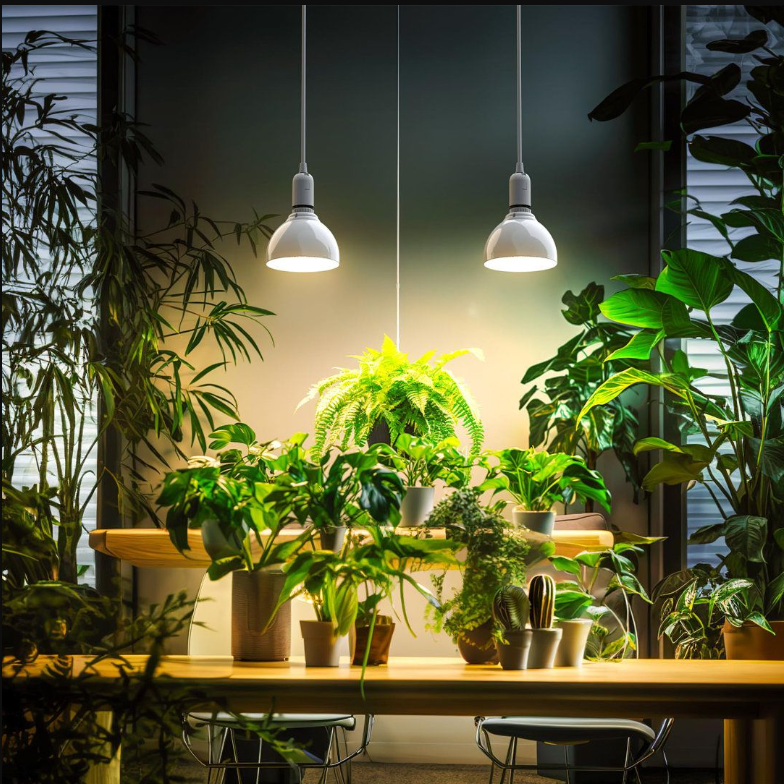
Walk into any garden store or scroll through Amazon and you’ll see confusing specs everywhere: wattage, lumens, PAR, Kelvin, PPFD. Here’s what genuinely matters, in plain language.
1. Light Spectrum (Not Just “Full Spectrum”)
Plants primarily use red and blue light for photosynthesis. Blue light supports compact, leafy growth, while red light supports flowering and fruiting. Most modern LED grow lights are labeled “full spectrum,” meaning they include a mix across the visible range, similar to sunlight. For general houseplants, full-spectrum white LEDs (around 4000K–6500K) look natural in a room and work well.
2. Intensity and Distance
A light can have the right spectrum but still be too weak if it’s too far from the plant or just underpowered. As a rough guide:
- Low-light plants (pothos, snake plants, ZZ plants): 10–12 inches from the light source
- Medium-light plants (herbs, most tropicals): 6–10 inches
- High-light plants (succulents, flowering plants, seed starting): 4–8 inches
Always check the manufacturer’s recommended distance, since power output varies a lot between brands.
3. PPFD (If You Want to Go Deeper)
PPFD (Photosynthetic Photon Flux Density) measures how much usable light actually reaches your plant’s leaves. It’s a more accurate number than lumens, which measure brightness to the human eye, not what plants can use. You don’t need to obsess over this for houseplants, but if you’re growing vegetables or starting seeds indoors, look for lights with published PPFD ratings rather than just wattage claims.
4. Coverage Area
Match the light’s footprint to your setup. A small clip-on light might only cover one pot, while a full-spectrum panel can cover an entire shelf or a small grow tent.
5. Heat Output
LEDs run much cooler than older fluorescent or incandescent grow lights, which matters if the light sits close to delicate leaves. Cooler operation also means lower electricity bills over time.
Types of Grow Lights Compared
| Light Type | Best For | Pros | Cons |
|---|---|---|---|
| LED grow lights | Most home growers, all plant types | Energy efficient, low heat, long lifespan, wide spectrum options | Higher upfront cost than fluorescent |
| Fluorescent (T5/T8) | Seed starting, low-light plants | Cheap, widely available, gentle on seedlings | Bulkier, need frequent bulb replacement, less efficient |
| CFL bulbs | Small setups, single plants | Very affordable, fits standard fixtures | Limited coverage, less intense than LED |
| HID (metal halide/HPS) | Serious flowering plants, larger grow tents | Very high output, proven for flowering | Runs hot, uses more electricity, needs ventilation |
For the vast majority of indoor plant owners — people growing houseplants, herbs, or starting a few seed trays — LED grow lights are the best overall choice in 2026. They’ve become significantly more affordable in the last few years, last tens of thousands of hours, and produce far less heat than older technology.
Best Grow Lights for Indoor Plants by Use Case
Different growing situations call for different setups. Here’s how to match the light to your actual needs.
For a Single Houseplant on a Shelf or Desk
A small clip-on or gooseneck LED light works well here. Look for adjustable brightness and a timer function so you’re not manually switching it on and off every day.
For a Windowsill Herb Garden
Compact LED strip lights or small panel lights designed for herbs give consistent light without taking up counter space. Basil, mint, and parsley generally need 12–16 hours of light daily indoors.
For Multiple Plants on a Shelving Unit
Full-spectrum LED shop-light-style panels or bar lights mounted above each shelf give even coverage across several pots at once. This is one of the most space-efficient setups for plant collectors.
For Seed Starting
Seedlings need bright, close light to avoid stretching. T5 fluorescent fixtures or LED seed-starting panels positioned 2–4 inches above trays, with the light raised as seedlings grow, work reliably and are budget-friendly.
For a Grow Tent or Serious Setup
If you’re growing vegetables, peppers, or flowering plants indoors year-round, invest in a higher-output full-spectrum LED panel with adjustable spectrum settings and a built-in timer. This is where checking PPFD and coverage specs really pays off.
How Many Hours a Day Should Grow Lights Run?
This depends on the plant, but general starting points are:
- Low-light houseplants: 8–10 hours daily
- Medium to high-light plants: 12–14 hours daily
- Seedlings and herbs: 14–16 hours daily
- Flowering plants (to trigger bloom): often need a specific light/dark cycle, commonly 12/12
A simple mechanical or smart timer removes the guesswork and keeps the schedule consistent, which matters more to plants than people realize — irregular light cycles can stress plants just like irregular watering.
Common Mistakes People Make With Grow Lights
- Placing the light too far away. Even a powerful light loses effectiveness quickly with distance.
- Leaving lights on 24/7. Plants need a dark period to rest; more light isn’t always better.
- Ignoring the spectrum for flowering plants. A light heavy in blue with little red may keep a plant leafy but prevent it from blooming.
- Choosing based on wattage alone. Wattage tells you power draw, not how much usable light reaches the plant. Two lights with the same wattage can perform very differently.
- Not replacing old fluorescent tubes. Fluorescent bulbs lose output over time even if they still light up; replace them roughly every 12 months for serious growing.
A Realistic Look at Cost vs. Value
Budget LED lights (clip-on or small panels) typically start under $30 and work fine for one or two low-to-medium light plants. Mid-range full-spectrum panels for a shelving unit or small tent usually fall in the $50–$150 range and offer noticeably better coverage and adjustability. High-output panels for serious indoor growing can run $150–$400 or more, but they pay for themselves through lower electricity use and better plant results compared to older HID setups.
There’s no single “best” price point — it depends on how many plants you have and how serious your growing goals are. Someone with three pothos on a bookshelf doesn’t need the same light as someone growing tomatoes indoors through winter.
Conclusion
Picking the best grow lights for indoor plants comes down to matching the light’s spectrum, intensity, and coverage to what you’re actually growing, then giving your plants a consistent daily schedule. You don’t need the most expensive light on the market — you need the right one for your space and your plants’ needs. Start with your goal (keeping houseplants alive, starting seeds, or growing herbs and vegetables), pick the light type that fits that use case from the comparisons above, and adjust distance and hours based on how your plants respond over the following few weeks.
FAQs
Do indoor plants really need a grow light, or is natural light enough?
Natural light is often enough for low-light plants near a bright window, but many homes — especially in winter or in rooms without direct sun — don’t provide enough intensity or duration for healthy growth, flowering, or fruiting.
What color light is best for plant growth?
Plants use red and blue wavelengths most efficiently. Blue light supports leafy growth, while red light supports flowering and fruiting. Most full-spectrum LED grow lights combine both, along with green and other wavelengths for balanced growth.
How close should a grow light be to my plants?
It depends on the plant and light strength, but a general range is 4–12 inches. Low-light plants can handle lights farther away, while seedlings and high-light plants usually need the light closer, around 2–6 inches.
Can I leave a grow light on all day and night?
No. Plants need a dark rest period, typically 8–16 hours of light followed by darkness, depending on the species. Continuous light can stress plants and, in some cases, prevent flowering.
Are LED grow lights better than fluorescent ones?
For most home growers, yes. LEDs use less electricity, produce less heat, last far longer, and now come in affordable options for almost any budget, though fluorescent tubes remain a solid low-cost choice for seed starting.
Will a grow light make my houseplants grow faster than in nature?
A grow light can help plants grow more consistently indoors by making up for weak or inconsistent natural light, but it won’t override other needs like proper watering, humidity, and soil nutrients.
For more updates visit: Daily Front

Other Articles




No Comment! Be the first one.