


Open any pantry door and you’ll usually find one of two things: a system that works, or a pile of half-open cereal boxes fighting for space with three jars of expired spices. If yours leans toward the second one, you’re not alone and the fix is simpler than most Pinterest boards make it look.
This guide walks through practical pantry organization ideas that hold up after the first week, not just the ones that look good in a photo. We’ll cover zoning, container choices, small-space tricks, and a few mistakes worth avoiding.
Why Most Pantry Systems Fall Apart
Before adding bins and labels, it helps to know why pantries get messy in the first place. Usually it’s one of three things:
- No clear zones — snacks, baking supplies, and canned goods all mixed together
- Poor visibility — items get pushed to the back and forgotten until they expire
- Systems too complicated to maintain — if putting something away takes effort, it won’t happen
A good pantry system solves all three by making the right place for something also the easy place for it.
Start With a Full Inventory (Yes, All of It)
Pull everything out. This step feels tedious, but it’s the only way to see what you actually own, spot duplicates, and check expiration dates. Most people find at least a few items they forgot they had — sometimes two or three of the same spice.
While everything is out, wipe down shelves. It’s a small step, but it means you’re organizing a clean space instead of building around crumbs and sticky spots.
Group Items Into Zones
Zoning is the backbone of good pantry organization ideas, and it’s the part that makes daily use easier, not just the pantry itself neater.
A simple zone layout might look like this:
| Zone | What Goes There | Placement Tip |
|---|---|---|
| Breakfast | Cereal, oats, pancake mix | Eye level, easy reach for mornings |
| Baking | Flour, sugar, baking soda, extracts | Grouped together in bins |
| Snacks | Chips, crackers, granola bars | Kid-height shelf if applicable |
| Canned goods | Vegetables, beans, soups | Lower or deeper shelf |
| Grains & pasta | Rice, pasta, quinoa | Clear containers for quick checks |
| Backstock | Extra bottles, bulk buys | Top or bottom shelf, less-used space |
You don’t need every one of these zones — adjust based on how your household actually cooks and shops.
Choose Containers That Match Your Habits
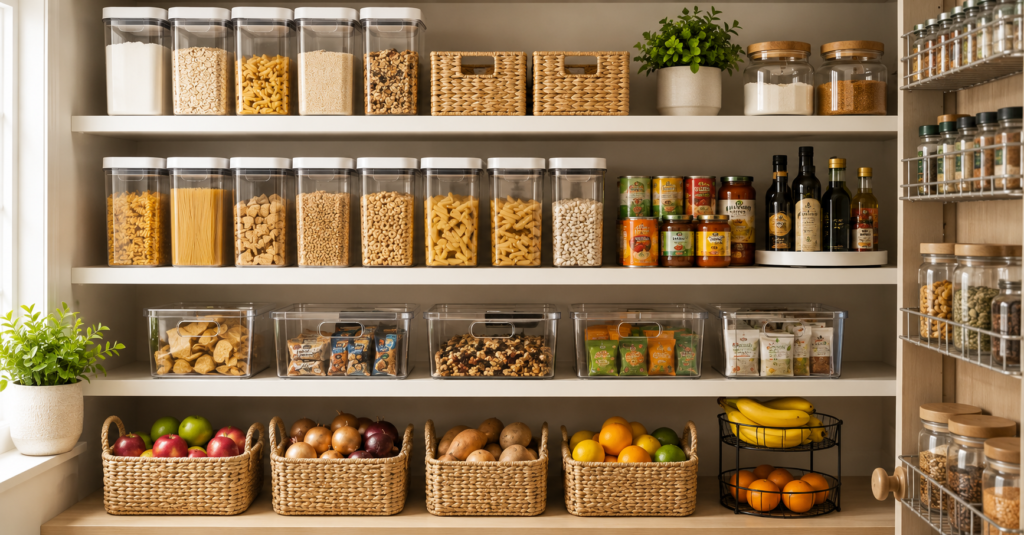
Matching clear bins are popular for a reason: they make contents visible and keep shelves looking tidy. But they’re not required for a functional pantry.
A few honest notes on containers:
- Clear airtight containers work best for dry goods like flour, rice, and oats — they keep pests out and let you see when you’re running low.
- Labeled baskets are useful for items that don’t need airtight storage, like snack bags or sauce packets.
- Lazy Susans solve the “lost in the back” problem for oils, sauces, and small jars.
- Stackable bins help vertical space in narrow pantries.
If budget matters, you don’t need to replace every box on day one. Start with the categories that go bad or get lost most often — usually flour, sugar, and opened snack bags — then add more containers over time.
Small Pantry? Use Vertical Space First
Not everyone has a walk-in pantry, and that’s fine. Small pantry organization ideas usually come down to using height and door space that often gets ignored.
- Add an over-the-door rack for spices or small jars
- Use tiered shelf risers so you can see items in the back row
- Store lightweight items (chips, cereal boxes) on higher shelves
- Keep heavier items (canned goods, jars) at waist height for easy lifting
- Use the top of the pantry for items you grab only occasionally
A narrow pantry can hold surprisingly more once vertical space is treated as real storage, not wasted space.
Labels: Simple Beats Fancy
Labels matter more for function than looks. A basic label maker or even masking tape and a marker works just as well as decorative printed labels — what matters is that everyone in the household knows where things go back to.
If you have kids, picture labels (a small icon of pasta, snacks, etc.) can help younger family members put things away correctly too.
Keep It Maintainable With a Simple Routine
The best pantry organization ideas fail without upkeep. A quick 10-minute check every couple of weeks — tossing expired items, wiping spills, moving older products to the front — keeps the system working long term.
A practical rule many households use: first in, first out. When you restock, put new items behind older ones so nothing sits forgotten until it expires.
Common Mistakes to Avoid
- Buying containers before measuring your shelves (sizing mismatches are common)
- Over-organizing with too many categories to remember
- Ignoring expiration dates during the reset
- Forgetting to label bins that hold similar-looking items, like sugar and flour
- Skipping regular check-ins after the initial organizing day
Conclusion
Good pantry organization isn’t about matching containers or a picture-perfect shelf — it’s about knowing where things go and being able to see what you have. Start with a full clear-out, group items into zones that fit how your household actually cooks, and pick containers that match real habits rather than trends. Once the system is in place, a short maintenance routine keeps it from sliding back into clutter. Small, consistent choices beat one big overhaul that’s too complicated to keep up.
FAQs
What are the best pantry organization ideas for a small kitchen?
Focus on vertical space door racks, stackable bins, and shelf risers. These let a small pantry hold more without needing extra floor space.
Do I need matching containers to organize a pantry well?
No. Matching containers look neat, but function matters more. Clear, airtight bins for dry goods and labeled baskets for everything else work just as well as a fully coordinated set.
How often should I reorganize my pantry?
A full reset once or twice a year is usually enough, with a quick 10-minute check every couple of weeks to remove expired items and restock properly.
What should not go in pantry organization bins?
Items that need refrigeration, opened perishables, or anything sensitive to moisture shouldn’t sit in sealed non-vented containers, since trapped humidity can cause spoilage faster.
How do I stop food from expiring unnoticed in the pantry?
Use the first-in, first-out method place new purchases behind older stock and keep frequently used items at eye level so nothing gets pushed to the back and forgotten.
Are pantry labels really necessary?
They’re not required, but they help everyone in the household return items to the right spot, which keeps the system working without one person doing all the upkeep.
For more updates visit: DAILY FRONT

Other Articles

Brandon Lake Net Worth What We Actually Know in 2026
How to Cancel Game Mopfell78 Complete Step-by-Step Guide





No Comment! Be the first one.