


The leaves start turning, the coffee shop switches to pumpkin spice, and your closet suddenly feels wrong. Summer clothes are too thin. Winter coats are too much. That in-between stretch 55°F mornings that turn into 70°F afternoons is where most fall outfits fall apart.
This guide isn’t a list of “10 cozy sweaters to buy.” It’s a practical breakdown of how to actually dress for fall: what to layer, what fabrics work, how to mix pieces you already own, and how to adjust for early fall versus late fall. Whether you’re dressing for work, weekends, or that first chilly walk with a hot drink in hand, you’ll find something usable here.
What Makes a Fall Outfit Work?
A good fall outfit does three things: it layers easily, it handles a 15–20 degree temperature swing in one day, and it uses a color palette that doesn’t fight the season. That’s really it. You don’t need a completely new wardrobe you need a system.
The core formula most stylists rely on is simple:
Base layer + mid layer + outer layer + footwear that matches the terrain.
Once you understand that formula, “fall outfit ideas” stop being a Pinterest board and start being a habit.
Layering: The Real Secret to Fall Dressing
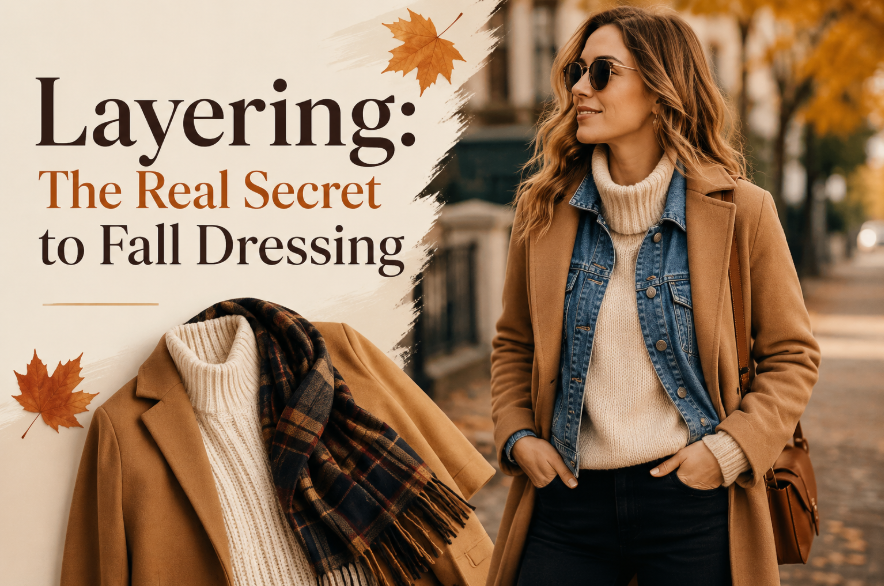
Layering isn’t just about warmth. It’s about flexibility. You want to be able to add or remove a piece without changing the whole outfit.
The Three-Layer Method
- Base layer – A t-shirt, thin turtleneck, or lightweight long-sleeve. This sits against your skin and should be breathable.
- Mid layer – A cardigan, flannel shirt, light sweater, or vest. This is your adjustable layer the one you take off when it warms up.
- Outer layer – A jacket, trench coat, or denim jacket for wind and cooler evenings.
Common Layering Mistakes
- Wearing one thick sweater instead of two thinner layers (harder to adjust through the day)
- Skipping the outer layer because “it’s not that cold yet” mornings and evenings say otherwise
- Choosing bulky fabrics that don’t fit under a jacket
Fall Outfit Ideas by Occasion
Different settings call for different combinations. Here’s a practical breakdown.
Casual Weekend Outfits
- Straight-leg jeans, a waffle-knit long-sleeve top, and a denim or utility jacket
- Corduroy pants with a fitted sweater and white sneakers
- A midi skirt with an oversized cardigan and ankle boots
Work or Office Outfits
- Tailored trousers, a tucked-in blouse, and a blazer in rust, olive, or camel
- A knit dress with a structured coat and loafers
- Wide-leg pants with a turtleneck and a trench coat for the commute
Cozy Weekend-at-Home or Errand-Day Looks
- Leggings or joggers, an oversized flannel, and slip-on sneakers
- A sweatshirt with straight jeans and a beanie for cooler days
Date Night or Evening Outfits
- A slip dress layered under a leather jacket
- Dark denim, a silk top, and ankle boots
- A turtleneck with a midi skirt and statement earrings
Fall Color Palettes That Actually Look Good Together
Fall fashion leans into warm, earthy tones, but that doesn’t mean you’re stuck with orange and brown. Here’s a breakdown of color families that consistently work well this season, based on what’s shown up across recent fashion coverage and retail trend reports.
| Color Family | Examples | Pairs Well With |
|---|---|---|
| Warm neutrals | Camel, tan, cream | Rust, navy, olive |
| Earth tones | Rust, terracotta, mustard | Denim, cream, brown |
| Deep jewel tones | Burgundy, forest green, plum | Black, camel, gray |
| Classic basics | Black, gray, navy | Almost everything above |
A simple trick: pick one neutral (camel, black, or gray) as your anchor color, then add one seasonal accent color per outfit. This keeps things looking put-together without overthinking it.
Fabrics That Actually Handle Fall Weather
Not every “fall fabric” is created equal. Some look seasonal but perform poorly once the temperature drops or it starts drizzling.
- Wool and wool blends – Insulate well and resist wrinkling; good for coats and sweaters
- Corduroy – Warm, durable, and textured enough to add visual interest
- Denim – Versatile for both jackets and pants, works across temperatures
- Flannel – Soft, warm, and easy to layer over a t-shirt
- Leather (real or faux) – Blocks wind well, ideal for jackets
- Cotton jersey – Good for base layers, but not enough insulation alone on colder days
Avoid relying too heavily on thin synthetic blends for outer layers they tend to trap moisture and don’t hold up against wind.
Footwear for Fall: Matching Shoes to the Day
Footwear changes more in fall than people expect, mostly because of unpredictable weather.
- Ankle boots – The most versatile fall shoe; works with jeans, skirts, and dresses
- Chelsea boots – Slightly more polished, good for work or dinner
- Sneakers – Fine for early fall or dry days, but not ideal once it rains
- Loafers – A smart choice for office settings paired with trousers or skirts
- Waterproof boots – Worth the investment if your area gets regular fall rain
Early Fall vs. Late Fall: Adjusting Your Outfit
One mistake a lot of people make is dressing the same way in September as they do in November. Fall isn’t one temperature it’s a gradient.
Early fall (still warm, 65–75°F): Light layers, short-sleeve or thin long-sleeve tops, light jackets you can tie around your waist.
Mid fall (50–65°F): Full three-layer system, medium-weight jackets, closed-toe shoes.
Late fall (35–50°F): Heavier coats, wool sweaters, scarves, and boots — this is basically a transition into winter dressing.
Check your actual local forecast rather than the calendar date. Fall arrives at different times depending on where you live, and “fall outfit ideas” that work in a mild climate may be too light for a colder one.
ALSO READ: The Real Cosmopolitan Drink Recipe (No Guesswork, Just a Proper Pink Cocktail)
Building a Capable Fall Capsule Wardrobe
You don’t need dozens of new pieces. A functional fall capsule usually includes:
- 2–3 neutral sweaters or knit tops
- 1 versatile jacket (denim or utility style)
- 1 warmer coat (wool or trench)
- 2 pairs of pants that pair with everything (jeans + trousers)
- 1 midi skirt or dress
- 2 pairs of shoes (boots + sneakers or loafers)
- 1–2 scarves for both warmth and styling
With these building blocks, you can create over a dozen different outfit combinations without buying anything new every season.
Final Thoughts
Fall dressing isn’t about following a trend list it’s about building a small system of pieces that layer well, handle temperature swings, and fit your actual life. Start with your base wardrobe, add one or two seasonal pieces if needed, and build outfits around the three-layer method. Once that clicks, “what do I wear today” stops being a daily struggle.
FAQs
What are easy fall outfit ideas for beginners?
Start with a base layer, a cardigan or flannel as a mid layer, and a light jacket. Pair with jeans and ankle boots. This combination works for most casual settings and is easy to adjust as temperatures shift through the day.
What colors are best for fall outfits?
Warm neutrals like camel and tan, earth tones like rust and mustard, and deep jewel tones like burgundy and forest green all work well. Anchoring an outfit with one neutral and adding a single accent color keeps things simple and cohesive.
How do I dress for fall if it’s still warm outside?
Focus on lightweight layers instead of heavy ones. A thin long-sleeve top, light jacket, and breathable fabrics like cotton or light denim work well for early fall days that are still in the 65–75°F range.
What shoes go with most fall outfits?
Ankle boots are the most versatile option because they pair with jeans, skirts, and dresses alike. Loafers work well for office settings, and waterproof boots are worth having if your area gets regular fall rain.
How many pieces do I need for a fall capsule wardrobe?
A functional fall capsule usually needs around 10–12 pieces: a few sweaters, one lighter jacket, one warmer coat, two versatile pants, a skirt or dress, two pairs of shoes, and a scarf or two. These mix and match into many outfit combinations.
Is layering necessary for fall, or just a styling choice?
Layering is functional, not just aesthetic. Fall temperatures often swing 15–20 degrees between morning and afternoon, so layers let you add or remove clothing throughout the day without needing a full outfit change.
For more updates visit: DAILY FRONT

Other Articles

Who Is Brock Lesnar’s Wife? Meet Sable, aka Rena Lesnar
Morpheus8 Near Me How to Find a Safe, Skilled Provider

No Comment! Be the first one.