


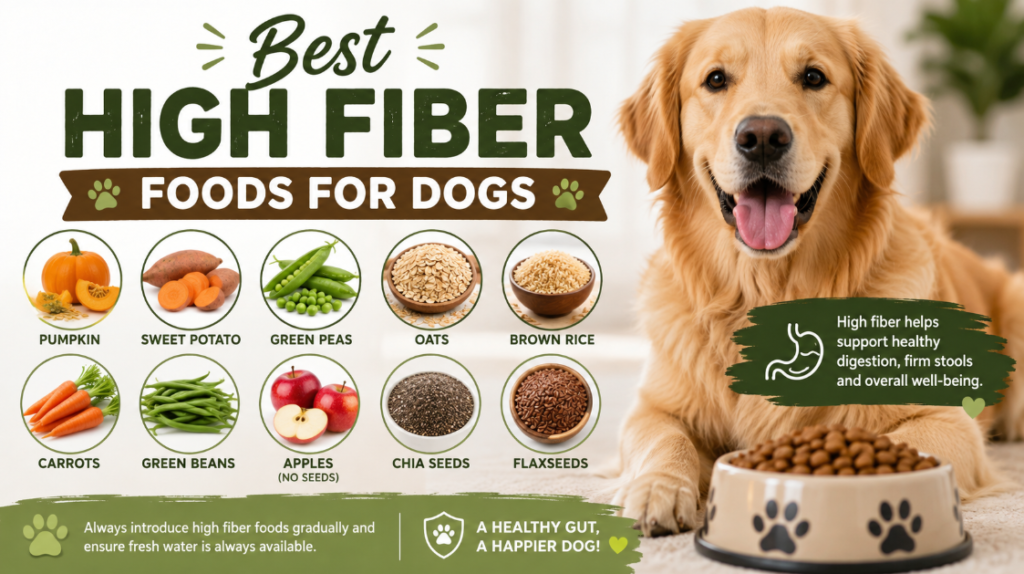
Looking for high fiber foods for dogs? Fibre can support healthy digestion and regular bowel movements. Many dogs can get extra fibre from simple foods such as pumpkin, carrots and sweet potato.
Fibre should still form only part of a balanced diet. Too much can upset your dog’s stomach. A sudden change can also cause gas or loose stools.
The good news is that several everyday foods can provide useful fibre. The key is to choose safe foods and serve them in small amounts.
Why Do Dogs Need Fibre?
Fibre helps support your dog’s digestive system. It can help food move through the gut and support normal bowel movements.
Different types of fibre work in different ways. Some fibre adds bulk to stools. Other types help hold water in the digestive tract.
A complete dog food often provides enough fibre for a healthy dog. Some dogs may need extra fibre for specific dietary reasons. Always consider your dog’s overall diet before adding new foods.
Best High Fiber Foods for Dogs
Pumpkin
Plain pumpkin is one of the most popular high fiber foods for dogs. It contains fibre and water. This combination can support normal digestion.
Use plain cooked pumpkin or plain canned pumpkin. Avoid pumpkin pie filling. It may contain sugar, spices or other ingredients that dogs should not eat.
Start with a small portion. Watch your dog’s stool and stomach after adding it to their food.
Sweet Potato
Sweet potato provides fibre and other nutrients. Many dogs enjoy its soft texture and mild taste.
Cook sweet potato before giving it to your dog. Serve it plain. Do not add butter, salt, sugar or seasoning.
Cut it into small pieces or mash it into your dog’s normal food. Keep the portion small, especially when you first introduce it.
Carrots
Carrots can give dogs a useful source of fibre. They also make a simple treat for many dogs.
You can offer carrots raw or cooked. Cut large carrots into small pieces for your dog’s size. This makes them easier to chew.
Avoid adding salt, butter or sauces. Plain carrots work best as an occasional treat.
Green Beans
Green beans contain fibre and can make a healthy addition to some dogs’ diets. Many dogs also enjoy their crunchy texture.
Serve them plain and cut them into suitable pieces. Fresh or cooked green beans can work well.
Avoid green beans that contain sauces, salt or strong seasonings. Simple food is the better choice for dogs.
Apples
Apples contain fibre and can work as an occasional dog treat. They also provide moisture and natural sweetness.
Always remove the core and seeds before serving. Then cut the apple into small pieces.
Do not give your dog large amounts of apple. Too much fruit can cause stomach upset and adds extra sugar to the diet.
Pears
Pears provide fibre and water. Small pieces can make an occasional treat for many dogs.
Remove the seeds, core and stem first. Then cut the pear into small pieces.
Serve only a small amount at first. Stop giving it if your dog develops loose stools or other digestive problems.
Plain Oatmeal
Plain cooked oatmeal can provide useful dietary fibre. Some dogs can eat small amounts without problems.
Cook the oats with water. Do not add sugar, chocolate, artificial sweeteners or flavourings.
Oatmeal contains calories, so keep portions sensible. It should never replace your dog’s complete and balanced food.
How Does Fibre Help Digestion?
Fibre can help support normal bowel function. It can also affect stool texture and movement through the digestive tract.
Some types of fibre add bulk to stools. Other types help retain water. Fibre also supports the normal activity of helpful bacteria in the gut.
However, more fibre does not always mean better digestion. Too much can cause gas, bloating or loose stools.
How Much Fibre Should a Dog Have?
Every dog has different needs. Age, size, activity and health can all affect the right diet.
A healthy dog may already get enough fibre from its normal food. You do not always need to add extra fibre.
If you want to add high fiber foods for dogs, start with a small amount. Introduce one food at a time. This makes it easier to see how your dog reacts.
How to Add Fibre to Your Dog’s Food
Make dietary changes slowly. Start with a small serving of one safe food.
For example, you can mix a little plain pumpkin into your dog’s usual meal. You can also offer a few small pieces of cooked carrot or sweet potato.
Watch your dog’s digestion over the next few days. If you notice loose stools, gas or other problems, stop the new food and speak with your vet if the issue continues.
Can Fibre Help With Dog Constipation?
Fibre can help support normal bowel movements in some dogs. However, constipation can have many causes.
A dog may become constipated because of diet, low water intake or another health problem. Adding fibre may not fix the underlying cause.
Give your dog access to fresh water every day. If constipation continues, contact your vet. Your dog may need a proper examination.
Can Too Much Fibre Harm a Dog?
Yes, too much fibre can cause digestive problems. Your dog may develop gas, bloating or loose stools.
Adding several fibre-rich foods at the same time can make this more likely. It also makes it harder to know which food caused the problem.
Introduce new foods one at a time. Keep portions small and continue to provide a complete, balanced diet.
Foods Dogs Should Not Eat for Fibre
Some plant foods can harm dogs. Never use unsafe human foods as a source of fibre.
Avoid foods such as onions, garlic, grapes and raisins. Also avoid products that contain xylitol. This sweetener can be very dangerous for dogs.
Do not give dogs heavily seasoned leftovers. Foods with lots of salt, sugar or fat can also cause problems.
When Should You Contact a Vet?
Talk to your vet if your dog has ongoing digestive problems. This includes repeated constipation, diarrhoea, vomiting or loss of appetite.
You should also seek advice if your dog has a health condition or follows a special diet. Extra fibre may not suit every dog.
Your vet can help you choose the right food and portion. They can also check for health problems that may affect digestion.
Conclusion
High fiber foods for dogs can support a healthy digestive system when you use them correctly. Plain pumpkin, sweet potato, carrots, green beans, apples, pears and oatmeal can provide useful fibre.
Always introduce new foods slowly. Keep portions small and avoid unsafe ingredients. Your dog’s main diet should still provide complete and balanced nutrition.
If your dog has ongoing digestive problems, do not rely on extra fibre alone. Speak with your vet to find the right solution.
FAQs
What are the best high fiber foods for dogs?
Pumpkin, sweet potato, carrots and green beans are popular high fiber foods for dogs. Apples, pears and plain oatmeal can also provide fibre in small amounts.
Can dogs eat pumpkin for fibre?
Yes, many dogs can eat plain pumpkin in small amounts. Choose plain pumpkin without sugar, spices or other added ingredients.
Are carrots good for dogs?
Yes, carrots can provide fibre and make a simple treat. Serve them plain and cut them into pieces that suit your dog’s size.
Can sweet potato help a dog’s digestion?
Sweet potato contains fibre and can support normal digestion. Always cook it first and serve it without salt, butter or seasoning.
Can fibre help a dog with constipation?
Fibre may help some dogs maintain regular bowel movements. However, constipation can have other causes, so ongoing problems need veterinary advice.
How much fibre should I give my dog?
The right amount depends on your dog’s diet and individual needs. Start with a small amount of a safe fibre-rich food and monitor your dog’s response.
For more updates visit: DAILY FRONT

Other Articles





No Comment! Be the first one.