


Frizzy hair can make even a simple hairstyle look messy and difficult to manage. Humidity, dryness, heat styling, damaged hair, and the wrong hair care routine can all make frizz more noticeable. The good news is that learning how to fix frizzy hair does not always require expensive treatments or complicated routines.
The key is to give your hair enough moisture while reducing the habits that cause dryness and damage. From choosing a gentle shampoo to changing how you dry and style your hair, small adjustments can make a noticeable difference. With consistent care, your hair can look smoother, softer, and easier to manage.
What Causes Frizzy Hair?
Frizz happens when the outer layer of the hair, known as the cuticle, becomes raised or uneven. When this happens, moisture from the air can enter the hair more easily. This is why frizz often becomes worse on humid days.
Dryness is another common cause. Hair that lacks moisture can become rough and more difficult to control. Frequent washing, hot water, heat styling, chemical treatments, and harsh hair products can contribute to dryness.
Hair texture also plays a role. Curly, wavy, and coarse hair types can naturally be more prone to frizz. However, straight hair can become frizzy too, especially when it is damaged or dehydrated.
How to Fix Frizzy Hair With Better Washing Habits
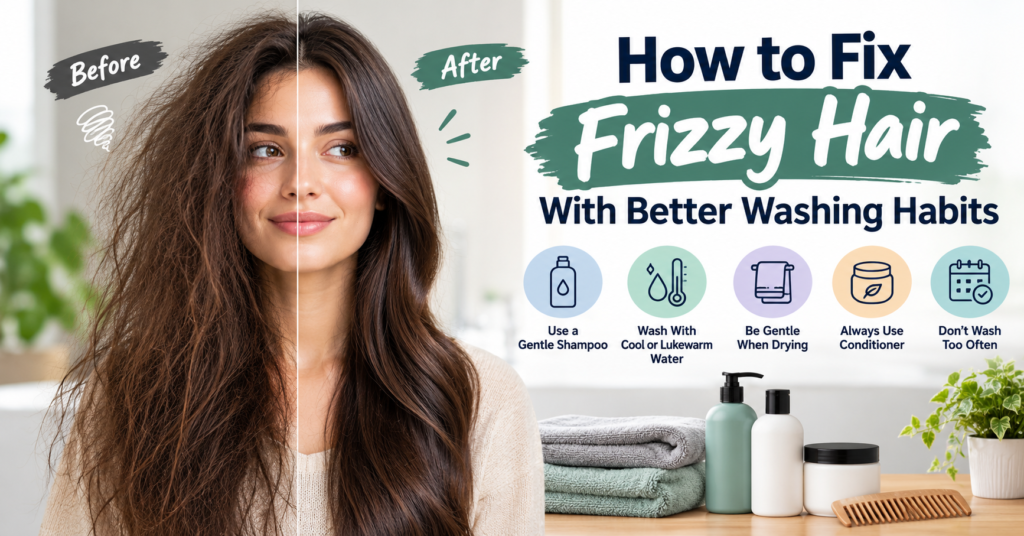
One of the simplest ways to manage frizz is to improve your washing routine. Washing your hair too frequently can remove natural oils that help keep the strands moisturised. If your hair feels dry after washing, consider reducing how often you shampoo it.
Choose a gentle shampoo that suits your hair type. Avoid using very hot water because it can leave the hair feeling dry. Lukewarm water is a better choice for regular washing.
Conditioner is also important. Apply it mainly through the mid-lengths and ends, where hair often needs more moisture. Leave it on for a short period before rinsing it thoroughly.
Use Moisture to Control Frizz
Moisture is one of the most important factors when learning how to fix frizzy hair. Dry strands are more likely to look rough and expand when exposed to humidity.
A moisturising conditioner can help improve the feel and appearance of dry hair. You can also use a leave-in conditioner if your hair needs extra hydration between washes.
Hair masks can provide additional moisture when used as part of a regular routine. Choose a product designed for your hair texture and follow its instructions. Using too much product can make fine hair look heavy, so start with a small amount.
Be Gentle When Drying Your Hair
The way you dry your hair can make a big difference to frizz. Rubbing wet hair aggressively with a standard towel can create friction and increase roughness.
Instead, gently squeeze excess water from your hair. Use a soft towel or a suitable hair-drying towel and press the hair rather than rubbing it.
Allowing your hair to air dry can also reduce exposure to heat. If you need to use a hair dryer, use a lower or medium temperature and keep the dryer moving instead of concentrating heat on one area.
Reduce Heat Styling
Straighteners, curling irons, and high-heat hair dryers can contribute to dryness and breakage. If you regularly use heat styling tools, reducing the temperature and frequency can help protect your hair.
Always use a heat-protective product before applying direct heat. Avoid repeatedly passing a straightener over the same section of hair.
If your hair already feels dry or damaged, give it regular breaks from heat styling. Simple hairstyles can help reduce stress on the hair while you work on improving its condition.
Choose the Right Anti-Frizz Products
The right products can make frizzy hair easier to manage. Leave-in conditioners, smoothing creams, hair oils, and anti-frizz serums can help create a smoother appearance.
When choosing a product, consider your hair type. Fine hair may respond better to lightweight formulas, while thick or coarse hair may benefit from richer creams or oils.
Apply styling products evenly rather than using a large amount in one area. Start with a small quantity and add more only when necessary.
Avoid Brushing Hair Too Aggressively
Brushing can affect how your hair looks, particularly if it is curly or wavy. Rough brushing can disturb the natural pattern of the hair and make frizz more visible.
Use a suitable brush or wide-tooth comb and work gently through knots. Starting from the ends and gradually moving upward can reduce pulling and unnecessary breakage.
For textured hair, brushing when it is completely dry may sometimes increase puffiness. Many people find that gently detangling damp hair with conditioner can help maintain a smoother appearance.
Protect Your Hair While Sleeping
Your nighttime routine can also affect frizz. Moving against a rough pillowcase for several hours can create friction and contribute to tangling.
A smoother pillowcase can help reduce friction while you sleep. You can also loosely secure longer hair before bed to reduce unnecessary movement and tangling.
Avoid tying your hair too tightly. Tight hairstyles can put stress on the roots and may contribute to breakage over time.
How to Fix Frizzy Hair in Humid Weather
Humidity can be particularly challenging for people with frizzy or naturally textured hair. When there is moisture in the air, dry hair can absorb some of that moisture, causing the strands to swell and change shape.
A lightweight anti-frizz serum or smoothing product can help create a protective layer over the hair. Apply it according to the product instructions, paying particular attention to areas that become frizzy.
Try to avoid constantly touching or brushing your hair during humid weather. Frequent handling can disturb the hair’s natural shape and make flyaways more noticeable.
Trim Damaged Ends Regularly
Split and damaged ends can make hair appear rough and difficult to control. Regular trims can remove damaged sections and help your hairstyle look cleaner.
A trim will not change the natural texture of your hair, but it can reduce the appearance of split ends and prevent damaged sections from becoming more noticeable.
If your hair has severe breakage, excessive dryness, or persistent changes in texture, consider speaking with a qualified hair professional or healthcare professional to identify possible underlying causes.
Create a Simple Anti-Frizz Hair Routine
A consistent routine is often more useful than constantly changing products. Start with a gentle shampoo when needed, followed by a moisturising conditioner. Use a leave-in product if your hair requires additional hydration.
Handle wet hair carefully and reduce unnecessary heat. When styling, choose products that match your hair type and avoid applying excessive amounts.
Over time, these small habits can help your hair retain moisture and look smoother. The goal is not necessarily to remove every flyaway but to keep the hair healthy, hydrated, and manageable.
Conclusion
Learning how to fix frizzy hair starts with understanding why your hair becomes frizzy in the first place. Dryness, humidity, heat, friction, damage, and unsuitable products can all contribute to the problem.
A gentle washing routine, regular conditioning, careful drying, reduced heat styling, and suitable anti-frizz products can make hair easier to manage. Consistency is important because healthier-looking hair usually comes from regular care rather than one quick solution.
FAQs
How to fix frizzy hair quickly?
To quickly reduce frizz, apply a small amount of anti-frizz serum, smoothing cream, or lightweight hair oil to the affected areas. Avoid using too much product because it can make the hair look greasy or heavy.
Why does my hair get frizzy after washing?
Hair can become frizzy after washing because of dryness, rough towel drying, hot water, or products that do not suit your hair type. Using conditioner and handling wet hair gently can help reduce frizz.
Does conditioner help with frizzy hair?
Yes, conditioner can help make hair feel smoother and more moisturised. A suitable conditioner can reduce dryness and make the hair easier to detangle and style.
How can I fix frizzy hair naturally?
You can reduce frizz naturally by avoiding excessive heat, washing with suitable products, conditioning regularly, drying your hair gently, and protecting it from unnecessary friction. Keeping your hair moisturised is especially important.
Is frizzy hair damaged?
Frizzy hair is not always damaged. Some people naturally have wavy, curly, or coarse hair that is more prone to frizz. However, sudden increases in frizz can sometimes be linked to dryness, breakage, or chemical and heat damage.
Does hair oil reduce frizz?
Hair oil can help reduce the appearance of frizz by smoothing the surface of the hair and adding some softness. Use a small amount because applying too much can make hair look greasy.
For more updates visit: DAILY FRONT

Other Articles

How to Fix Slow Cooker Recipes Easy Tips for Better Results
DWTS Elimination Who Was Eliminated and Who Is Left?




No Comment! Be the first one.