


Slow cookers make home cooking easy. However, even simple recipes can sometimes go wrong. Your meal may turn out too watery, dry, salty, bland, tough, or undercooked. The good news is that many slow cooker problems are easy to fix.
Learning how to fix slow cooker recipes can help you save a meal and avoid the same mistake next time. Small changes can make a big difference. The amount of liquid, cooking time, ingredient size, and heat level all matter.
Whether you are making a stew, curry, soup, casserole, or meat dish, you can often improve the result. You only need to understand what caused the problem.
How to Fix a Slow Cooker Recipe That Is Too Watery
Too much liquid is a common slow cooker problem. A slow cooker keeps moisture inside the pot. Very little liquid escapes during cooking. Meat and vegetables also release water as they cook.
If your meal is already cooked, remove the lid for a short time. This allows some moisture to escape. Use a higher setting if your slow cooker allows it. Do not leave the lid off for too long.
Cornflour can also help. Mix a small amount with cold water. Stir until the mixture is smooth. Add it to the hot cooking liquid and stir well. Give the sauce some time to thicken.
For future recipes, use less added liquid. Slow cooker meals often need less water or stock than stovetop dishes.
How to Fix a Slow Cooker Recipe That Is Too Dry
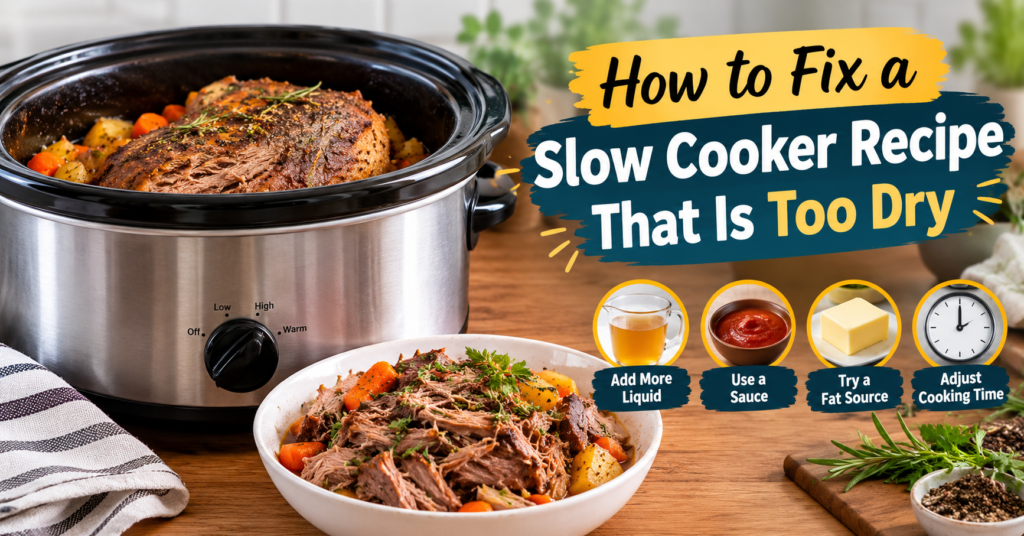
Dry food can have several causes. You may have used too little liquid. The cooking time may also be too long. Lean meat can become dry during extended cooking.
If the meal is already dry, add a little warm stock or gravy. You can also use a suitable sauce. Add a small amount first. This gives you better control over the final texture.
Shredding the meat can also help. Mix the meat with the sauce before serving. Let it sit for a few minutes so it can absorb some moisture.
For future meals, choose meat that works well with slow cooking. Beef chuck, pork shoulder, and chicken thighs are useful choices. They usually stay more tender during long cooking.
How to Fix Tough Meat in a Slow Cooker
Tough meat does not always mean that it has been overcooked. Some cuts need more time to become tender. Their connective tissue needs time to break down.
If the meat is still tough, continue cooking it. Make sure there is enough liquid in the pot. Check the meat from time to time until it becomes tender.
The cut of meat also matters. Tougher cuts often work well in a slow cooker. They can become soft and tender during long cooking.
Very lean meat may not give the same result. It can become dry before it becomes tender. Choosing the right cut can prevent this problem.
How to Fix an Undercooked Slow Cooker Meal
Sometimes vegetables remain hard. Meat may also need more time to cook. This can happen when the cooking time is too short. An overcrowded slow cooker can cause problems too.
Keep the lid closed as much as possible. Heat escapes whenever you open it. The cooker then needs extra time to return to the right temperature.
If the food is undercooked, continue cooking it. Check the texture as it cooks. For meat, use a food thermometer to check that it has reached a safe internal temperature.
Cut dense vegetables into similar-sized pieces. Potatoes and carrots should not be too large. Even pieces are more likely to cook at the same rate.
How to Fix a Slow Cooker Recipe That Tastes Bland
Slow cooking can create rich flavours. However, some meals still need more seasoning. The problem may be too little salt, herbs, spices, garlic, or onion.
Start with a small amount of seasoning. Add more only after tasting the food. This approach helps you avoid adding too much.
A little acidity can also improve flavour. Lemon juice or vinegar may brighten a heavy dish. Add only a small amount and taste again.
Browning meat before slow cooking can add more flavour too. The same applies to onions. This extra step can give your finished meal more depth.
How to Fix a Slow Cooker Recipe That Is Too Salty
Too much salt can make a meal difficult to enjoy. Fortunately, you may still be able to balance the flavour.
Add more unsalted ingredients if suitable. Extra vegetables, beans, or other ingredients can reduce the overall saltiness. Unsalted liquid may also help in some recipes.
Be careful with stock and sauces. Many prepared products already contain salt. Adding more could make the problem worse.
For future meals, season gradually. Stock cubes, gravy granules, soy sauce, and bacon can all add salt. Keep this in mind when adding extra seasoning.
How to Fix Vegetables That Are Too Soft
Soft vegetables are common in long-cooked meals. Some vegetables handle several hours of cooking well. Others can become mushy.
Root vegetables usually work well in slow cookers. Potatoes and carrots can hold their shape for longer periods. Delicate vegetables may need less cooking time.
Try adding delicate vegetables later. This can help them keep more texture. Cutting vegetables into larger pieces may also help.
Avoid making all vegetables the same size when they have different cooking times. Ingredients that cook quickly may need to go into the pot later.
How to Fix a Slow Cooker Recipe With Too Much Fat
Fat can collect on top of slow cooker meals. This often happens when you use fatty meat. Some fat adds flavour, but too much can make a dish greasy.
You can carefully skim fat from the surface. Use a spoon while the dish is hot. Take your time and remove only the excess.
Cooling the meal can make this easier. Fat often becomes more solid when chilled. You can then remove it from the surface.
Before cooking, trim large areas of visible fat from meat. There is no need to remove every bit. Some fat can help keep meat moist and flavourful.
How to Improve Slow Cooker Recipes Next Time
Good preparation can prevent many slow cooker problems. Avoid filling the cooker beyond its recommended level. Overfilling can affect how evenly the food cooks.
Keep the lid closed during cooking. Opening it too often allows heat to escape. This can increase the cooking time.
Remember that slow cookers can perform differently. One model may cook faster than another. Use the recipe time as a guide and check your food when needed.
Ingredient changes can also affect the result. Adding more vegetables or liquid may change the cooking time. Large changes should be made carefully.
When Should You Adjust a Slow Cooker Recipe?
Make changes when you understand the problem. A watery meal needs less liquid or a thickener. A dry meal may need more moisture. Tough meat may need more cooking time.
Small changes are easier to control. Avoid changing several ingredients at once. Taste the food as you make adjustments when it is safe to do so.
Over time, you will learn how your slow cooker works. You may notice that it cooks faster or slower than recipes suggest. This knowledge makes recipe adjustments much easier.
Conclusion
Learning how to fix slow cooker recipes can save a meal. It can also help you become more confident in the kitchen. Most common problems have a practical solution.
Too much liquid can be reduced or thickened. Dry food may need more moisture. Tough meat may need extra cooking time. Bland meals can often be improved with careful seasoning.
The key is to make small changes. Control the liquid, choose suitable ingredients, and avoid opening the lid too often. With practice, your slow cooker meals can become more consistent and enjoyable.
FAQs
Can you fix a slow cooker recipe that is too watery?
Yes. Remove the lid for a short period to let some moisture escape. You can also use cornflour to thicken the sauce. In future recipes, reduce the amount of added liquid.
How do you fix dry meat in a slow cooker?
Add a small amount of warm stock, gravy, or sauce. Let the meat sit in the liquid for a few minutes. Choosing a suitable cut can also help prevent dry meat.
Why is my slow cooker food bland?
Your meal may need more seasoning. Add salt, herbs, spices, garlic, or onion in small amounts. Browning meat before slow cooking can also create deeper flavour.
How do you thicken slow cooker recipes?
Cornflour is a simple option. Mix it with cold water first. Stir the mixture into the hot sauce and allow it to thicken before adding more.
Why is my slow cooker meat still tough?
Some cuts need more time to become tender. Continue cooking if the food is otherwise suitable for slow cooking. The type of meat also makes a big difference.
Can you fix a slow cooker recipe that is too salty?
Yes, sometimes. Add suitable unsalted ingredients to balance the flavour. Unsalted liquid may also help. Avoid adding more salty stock or sauces.
For more updates visit: DAILY FRONT

Other Articles

Wordle Answer Today Hints and Solution for September 30, 2026
How to Fix Frizzy Hair Easy Tips for Smooth, Healthy Hair



No Comment! Be the first one.