


A cramped corner, a wobbly desk, and a chair borrowed from the dining room — that’s how most small home offices start. If yours looks like that right now, you’re not alone, and you don’t need a spare room to fix it.
Small home office decorating ideas aren’t about squeezing in more furniture. They’re about making a tiny space feel calm, functional, and yours. This guide walks through real, practical ways to do that, without a big budget or a contractor.
Why Small Home Offices Need a Different Approach
A small workspace behaves differently than a large one. Every object takes up visual space, not just physical space. Clutter feels louder. Poor lighting feels darker. A cheap chair feels worse after hour three.
That means the goal isn’t to fit more in — it’s to make fewer, smarter choices. A well-planned 6×8 foot office can feel more productive than a poorly planned 12×12 foot one.
Start With the Right Layout, Not the Right Furniture
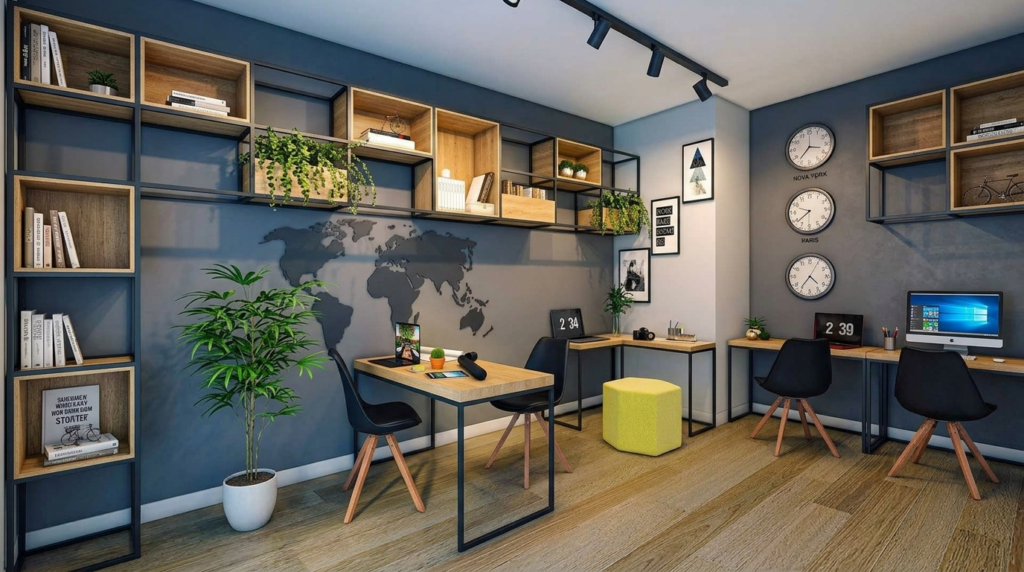
Before buying anything, figure out where the desk actually goes. This single decision affects everything else.
Face the Desk Toward Light, Not a Wall
Natural light reduces eye strain and makes a small room feel bigger. If possible, place the desk perpendicular to a window rather than facing a blank wall — you get daylight without glare on your screen.
Use Corners Instead of Center Space
Corners are the most underused real estate in small rooms. An L-shaped or corner desk can free up 20–30% more floor space compared to a standard desk placed against a flat wall.
Keep a Walking Path Clear
Even in a small office, leave at least 24–30 inches of clear walking space. A room packed wall-to-wall with furniture feels smaller than one with a little breathing room, even if it holds less stuff.
Furniture Choices That Save Space
| Furniture Type | Best For | Why It Works in Small Spaces |
|---|---|---|
| Floating wall desk | Rooms under 50 sq ft | No legs, no bulk, easy to clean under |
| Corner desk | Awkward room shapes | Uses dead corner space |
| Fold-down desk | Multi-purpose rooms | Disappears when not in use |
| Narrow-depth desk (20–24 in) | Tight rooms | Leaves walking room without losing work surface |
| Slim rolling cart | Extra storage | Moves out of the way when needed |
Skip oversized executive desks in small rooms. A 40–48 inch wide desk is usually enough for a laptop, a notebook, and a lamp — and it won’t dominate the room.
Small Home Office Decorating Ideas by Budget
Low Budget (Under $50)
- Add a small area rug to define the workspace visually.
- Use removable wallpaper or a single accent wall for personality without repainting the whole room.
- Hang a clipboard-style organizer instead of buying a filing cabinet.
- Swap a harsh ceiling light for a warm desk lamp.
Mid Budget ($50–$200)
- Install floating shelves above the desk for books and plants without using floor space.
- Get a compact ergonomic chair — comfort matters more in small offices since you can’t “spread out” tension.
- Add blackout or light-diffusing curtains if the window causes glare.
Higher Budget ($200+)
- Invest in a wall-mounted fold-down desk system.
- Add acoustic panels if the space doubles as a call room — small rooms often have more echo, not less.
- Consider a standing desk converter to add flexibility without adding square footage.
Color and Light: The Two Cheapest Upgrades
Color and lighting cost the least but change the feel of a small office the most.
Use Light, Warm Neutrals
Soft white, warm gray, and pale sage make a small room feel open. Dark colors can look stylish in photos but often make a tiny room feel closed in during actual daily use.
Layer Three Types of Light
- Natural light from a window, when available
- Task light from a desk lamp aimed directly at your work surface
- Ambient light from a floor lamp or ceiling fixture to avoid harsh shadows
A single overhead bulb is usually the reason a small office feels sterile. Layering light fixes that without any renovation.
Storage Ideas That Don’t Eat Floor Space
Clutter is the fastest way to make a small office feel chaotic. The fix is vertical storage, not more furniture.
- Pegboards for cords, tools, and small supplies
- Wall-mounted shelves instead of bookcases
- Under-desk bins that use the space your feet don’t need
- Drawer organizers to stop small items from piling up on the desk surface
- Cord management clips so cables don’t create visual clutter
A good rule: if it’s not used weekly, it shouldn’t be on the desk.
Making a Small Office Feel Personal, Not Empty
Function matters, but a workspace that feels sterile is hard to sit in for eight hours. A few personal touches go a long way without adding clutter.
- One or two plants that tolerate low light, like pothos or snake plant
- A single piece of art or a framed print, rather than a gallery wall
- A textured item like a woven basket or ceramic mug holder to soften a room full of hard edges
- A small speaker or diffuser if it genuinely helps you focus
The goal is one or two meaningful items, not a shelf full of decorations competing for attention.
Common Mistakes to Avoid
- Buying furniture before measuring. A desk that looks small online can still overwhelm a tight room.
- Ignoring cable clutter. Tangled cords make even a tidy room look messy.
- Choosing style over comfort. A chair that looks great but isn’t supportive will cost more in the long run through back pain and lost focus.
- Overdecorating. In small spaces, every extra object reduces visual calm. Less really is more here.
- Skipping lighting. Many people redecorate furniture and colors but keep the same flat overhead light, which undoes most of the visual improvement.
Quick Small Home Office Checklist
- Desk fits the room without blocking a walkway
- At least one light source is angled at the work surface
- Wall storage used instead of floor storage where possible
- Neutral or warm color palette
- One or two personal touches, not more
- Cords are managed and hidden
Conclusion
You don’t need a big room to build a good home office — you need a room that’s planned well. Small home office decorating ideas work best when they focus on layout first, lighting second, and decoration last. Get those three right, and even a closet-sized office can feel calm, organized, and genuinely enjoyable to work in.
FAQs
What is the best desk size for a small home office?
A desk between 40–48 inches wide and 20–24 inches deep usually works well for a laptop and notebook setup without overwhelming a small room.
How do I make a small home office look bigger?
Use light wall colors, a desk placed near a window, vertical shelving instead of floor furniture, and a mirror placed to reflect natural light.
What colors work best for small home offices?
Soft neutrals like warm white, light gray, and pale green tend to make small rooms feel open, while very dark colors can make them feel smaller during daily use.
Do I need a separate room for a home office?
No. A corner of a bedroom, living room, or even a closet (sometimes called a “cloffice”) can work well with the right desk and lighting setup.
How can I reduce clutter in a small office?
Use wall-mounted storage, under-desk bins, and cable organizers, and keep only weekly-use items on the desk surface itself.
Is natural light necessary for a home office?
It’s not required, but it helps reduce eye strain and makes small rooms feel more open. If natural light isn’t available, layered artificial lighting is a good substitute.
For more updates visit: Daily Front

Other Articles
Best Grow Lights for Indoor Plants A Real Grower’s Guide
[…] Read more: Small Home Office Decorating Ideas That Actually Work […]