


Knowing how to fix a stripped screw hole in wood can save you from replacing furniture, repairing damaged cabinets, or dealing with loose shelves. A stripped hole happens when a screw can no longer grip the wood properly. This often occurs when a screw is removed and replaced several times, overtightened, or installed into soft or damaged wood.
Fortunately, most stripped screw holes in wood are easy to repair. The right method depends on the size of the hole, the type of wood, and how much strength the repaired connection needs. Small furniture repairs may only need wooden toothpicks, while larger or heavily damaged holes may require a wood dowel or a more substantial repair.
This guide explains how to fix a stripped screw hole wood problem using practical methods that work for common household repairs. With a few basic tools and materials, you can restore the hole and create a stronger surface for the screw.
Why Does a Screw Hole Become Stripped?
A screw hole becomes stripped when the wood fibres around the threads become damaged or compressed. Once the fibres lose their original shape, the screw cannot grip the surrounding material tightly.
Softwoods such as pine can be particularly vulnerable because their fibres can wear away more easily. Particleboard and MDF can also lose their holding strength when a screw is repeatedly removed and installed.
Overtightening a screw is another common cause. When too much force is applied, the screw can pull through the wood or destroy the fibres around the hole. Using the wrong screw size can also make the problem worse.
How to Fix a Stripped Screw Hole Wood Using Toothpicks
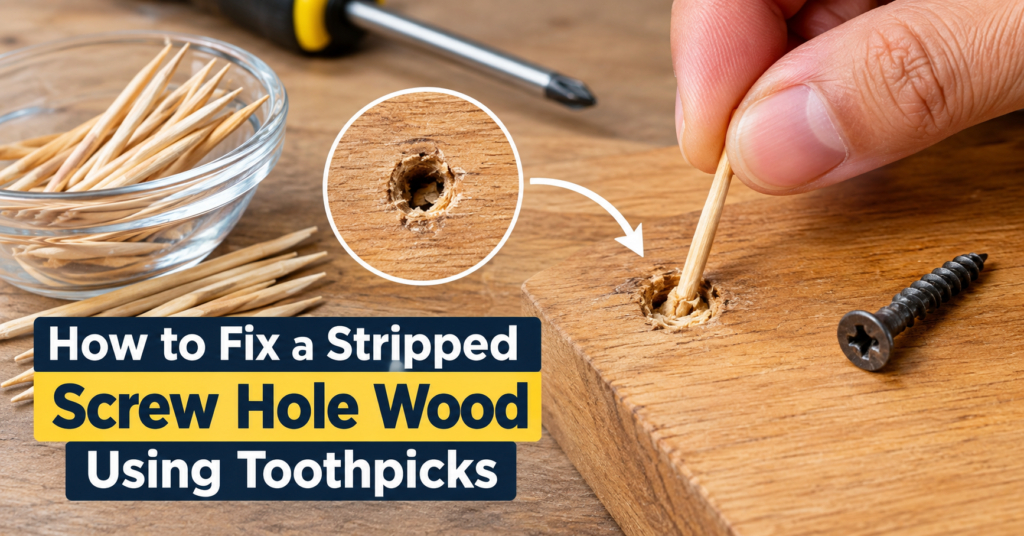
One of the easiest ways to repair a small stripped screw hole is to use wooden toothpicks. This method works well for lightweight furniture, hinges, handles, small brackets, and other household repairs.
First, remove the loose screw and clear away any loose wood from the hole. Place one or more wooden toothpicks into the opening. For a larger hole, you may need several pieces of wood to fill the damaged space.
Apply a small amount of wood glue to the toothpicks before pushing them into the hole. Allow the glue to dry fully. Once the repair has hardened, trim the excess wood so the surface is level with the surrounding area.
After the glue has dried, make a small pilot hole through the repaired section. Reinstall the screw carefully without overtightening it. The new wood fibres should give the screw something solid to grip.
Repairing a Stripped Hole With Wooden Dowels
A wooden dowel is a better option when the screw hole is larger or needs greater strength. This method removes the damaged material and replaces it with fresh wood.
Choose a dowel that fits the damaged hole closely. Drill the stripped hole so it has clean, even sides. Apply wood glue to the dowel and insert it into the opening.
Allow the glue to cure according to the manufacturer’s instructions. Once the dowel is firmly secured, cut it flush with the surface of the wood. Sand the area if necessary.
Drill a new pilot hole into the centre of the dowel. You can then install the original screw or an appropriately sized replacement. Because the screw is now gripping fresh wood, the connection should be considerably stronger.
Using Wood Filler for a Stripped Screw Hole
Wood filler can be useful for repairing damaged wood, but it is not always the best choice for a screw that needs to hold significant weight. Some fillers are designed mainly for cosmetic repairs and may not provide enough strength for a heavily loaded screw.
For a small hole in a decorative piece of furniture, wood filler can restore the surface. Remove loose material, apply the filler, and allow it to dry completely. Sand the repaired area until it is smooth.
If the screw needs to hold a hinge, bracket, shelf, or other load-bearing component, a wooden insert or dowel is generally more suitable. The screw needs solid wood fibres to create a dependable grip.
Can You Use a Larger Screw?
Using a slightly larger screw can sometimes solve a stripped screw hole without requiring a full repair. The replacement screw should be large enough to reach undamaged wood but not so large that it splits the material.
Before choosing this approach, consider the thickness and condition of the wood. A much larger screw can cause cracking, especially near an edge.
A longer screw may also work when there is additional solid wood behind the damaged section. However, make sure the screw will not pass through the material or damage anything behind it.
How to Repair a Stripped Screw Hole in MDF or Particleboard
MDF and particleboard require extra care because they do not behave like solid timber. Once a screw hole becomes damaged, the surrounding material can crumble and lose its ability to hold another screw.
For a small repair, a suitable wood repair product may help, but a stronger approach is to reinforce the damaged area with fresh wood. Depending on the location, you may be able to install a wooden dowel or add a new mounting point.
Avoid repeatedly driving a screw into the same damaged hole. This can enlarge the opening and make future repairs more difficult.
How to Prevent Screw Holes From Stripping Again
Preventing another stripped hole is often easier than repairing one. Always select a screw that matches the thickness and type of material.
Drilling an appropriately sized pilot hole can reduce stress on the wood and help the screw enter cleanly. The pilot hole should not be so large that the screw loses its grip.
When using a drill or screwdriver, stop tightening once the screw head is properly seated. Excessive torque can damage wood fibres and cause the hole to fail.
For hinges and other components that are frequently removed, consider using a stronger fastening method from the beginning. A suitable wooden insert, dowel repair, or alternative fixing can provide better long-term durability.
When Should You Replace the Screw?
A damaged screw should not always be reused. If the threads are worn, the head is damaged, or the screw has become bent, replacing it is usually sensible.
Choose a replacement screw that is appropriate for the material and application. The diameter and length should provide enough grip without creating unnecessary stress.
For furniture repairs, the replacement screw should also fit the existing hardware. A screw that is too large can damage the hinge or bracket, while one that is too short may not provide enough holding power.
What Tools Do You Need?
Most small stripped screw hole repairs require only basic household tools. Depending on the repair method, you may need a screwdriver or drill, drill bit, wooden toothpicks, wood glue, a small saw or cutter, sandpaper, or a wooden dowel.
For a simple toothpick repair, you can usually complete the job without specialised woodworking equipment. Larger repairs may require a drill and appropriately sized bit to create a clean opening for a dowel.
The key is to match the repair method to the condition of the wood. A small damaged hole does not need an unnecessarily complicated repair.
How to Fix a Stripped Screw Hole Wood Without Making It Worse
The most important part of repairing a stripped hole is avoiding further damage. Do not force a screw into a hole that has already lost its grip. Doing so can enlarge the opening and destroy more wood fibres.
Instead, remove the screw, clean the hole, and select a repair method that restores solid material. Allow glue, filler, or another repair compound to cure completely before reinstalling the screw.
When installing the screw again, use controlled pressure and avoid excessive tightening. A properly repaired hole should provide enough resistance without requiring extreme force.
Conclusion
Learning how to fix a stripped screw hole in wood is a useful DIY skill that can extend the life of furniture, cabinets, shelves, doors, and other wooden items. Small holes can often be repaired with toothpicks and wood glue, while larger or heavily damaged holes may benefit from a wooden dowel.
Wood filler can help with surface damage, but it may not provide enough strength for screws supporting heavy loads. Choosing the correct repair method, drilling a suitable pilot hole, and avoiding overtightening can help create a secure and lasting connection.
With the right approach, a stripped screw hole does not necessarily mean the wood or furniture needs to be replaced. In many cases, a simple repair can restore the original fixing point and make it usable again.
FAQs
What is the easiest way to fix a stripped screw hole in wood?
For a small stripped screw hole, wooden toothpicks and wood glue are among the simplest repair methods. Fill the damaged opening with glued toothpick pieces, allow them to dry, trim the excess, and drill a small pilot hole before reinstalling the screw.
Can I fix a stripped screw hole in wood with toothpicks?
Yes, toothpicks can work well for small stripped holes. They provide fresh wood fibres for the screw to grip. Using wood glue with the toothpicks can make the repair more secure and durable.
Is wood filler strong enough for a stripped screw hole?
Wood filler can repair surface damage, but many fillers are not designed to withstand the pulling force created by a screw. For a screw supporting a hinge, shelf, or bracket, a wooden dowel or another solid-wood repair is generally more appropriate.
Can I put a bigger screw into a stripped hole?
A slightly larger screw can sometimes grip undamaged wood around the original hole. However, the replacement must be suitable for the thickness and type of wood. A screw that is too large can split the material.
How do I fix a stripped screw hole in MDF?
Small MDF repairs can sometimes be restored with a suitable wood repair material, but severely damaged holes may need reinforcement with fresh wood. Avoid repeatedly installing screws into the same damaged opening because MDF can crumble around the hole.
Should I use a longer screw for a stripped wood hole?
A longer screw can help if there is additional solid wood behind the damaged section. However, make sure the screw will not pass through the material or interfere with anything behind it.
For more updates visit: DAILY FRONT

Other Articles

Why Are Flags at Half Mast Today UK & US Flag Status
Marisa Tomei Biography, Movies, Career, and Awards




No Comment! Be the first one.