


A small living room and a TV can feel like a tough combination. Put the screen in the wrong spot, and suddenly the whole room feels cramped, cables are everywhere, and there’s nowhere left for a bookshelf or even a comfortable chair. But a small space doesn’t have to mean a cluttered or awkward layout. With the right furniture choices and a bit of planning, a compact living room can look intentional, cozy, and even bigger than it actually is.
This guide walks through practical, tested layout ideas, furniture picks, and design tricks for fitting a TV into a small living room without it taking over the whole space.
Why TV Placement Matters More in Small Rooms
In a large living room, a TV is just one element among many. In a small room, it’s often the focal point whether you want it to be or not. The wall you choose, the height you mount it at, and what you put around it all affect how open or cramped the room feels.
A poorly placed TV can:
- Block natural light from windows
- Create awkward seating angles
- Make the room feel like it revolves around a screen instead of conversation
- Leave the space feeling smaller than it is
Getting the placement right solves most of these problems before you even think about decor.
Best TV Placement Options for Small Living Rooms
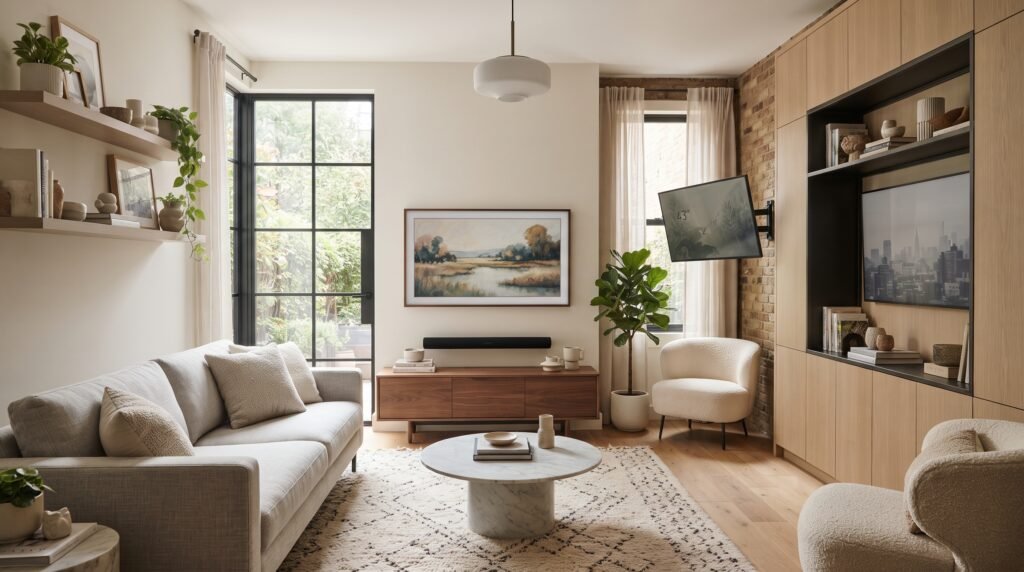
1. Mount It Above a Low Console
Wall-mounting the TV instead of using a bulky entertainment center is one of the simplest ways to free up floor space. A slim console underneath can hold a router, a few books, or a small plant, without eating into walking room.
2. Use a Corner Wall
If your living room is narrow or oddly shaped, a corner mount can work better than centering the TV on the main wall. This is especially useful in studio apartments or rooms that double as a bedroom.
3. Float the TV on a Media Wall
A media wall — where the TV sits within a built-in or DIY shelving unit — adds storage without adding visual bulk, since everything lines up flush against one wall instead of jutting into the room.
4. Keep the TV Off the Main Sightline From the Entry
Where possible, avoid placing the TV directly facing the front door. It makes the room feel like a waiting area rather than a living space, and it’s one of the first things guests notice when they walk in.
Furniture Ideas That Save Space
Choosing the right furniture is just as important as TV placement. Here are ideas that consistently work well in tight living rooms:
- Slim-profile sofas: A sofa with narrow arms can save 6–10 inches of width compared to bulky designs, which matters a lot in a small footprint.
- Nesting or stackable side tables: These give you flexible surface space without permanently taking up floor area.
- Wall-mounted shelves instead of bookcases: Shelves keep the floor clear and draw the eye upward, which makes ceilings feel higher.
- A loveseat instead of a full sofa: In rooms under 150 square feet, a loveseat plus one accent chair often fits better than a three-seat sofa.
- Ottomans with storage: Double as a coffee table, extra seating, and a place to hide remotes or blankets.
Furniture Size Guide for Small Living Rooms
| Room Size | Recommended Seating | TV Size Range | Viewing Distance |
|---|---|---|---|
| Under 120 sq ft | Loveseat + 1 chair | 32–43 inch | 4–6 feet |
| 120–180 sq ft | 2-seat sofa + ottoman | 43–55 inch | 6–8 feet |
| 180–250 sq ft | Standard sofa + chair | 50–65 inch | 8–10 feet |
These numbers are general guidelines, not fixed rules — actual comfort depends on ceiling height, seating angle, and personal preference.
Small Living Room Ideas With TV: Layout by Room Shape
Rectangular Rooms
Place the TV on the shorter wall and arrange seating in an L-shape along the two adjacent walls. This keeps a clear walking path down the middle and avoids blocking any windows.
Square Rooms
Center the TV on one wall and use a rug to anchor a symmetrical seating arrangement. Symmetry tends to make square rooms feel calmer and less boxy.
Open-Concept or Combined Living-Dining Rooms
Use the TV wall as the visual divider between the living and dining zones. A console table or open shelving unit behind the sofa can double as a subtle room separator without adding walls.
ALSO READ: Coffee Table Decor Ideas That Actually Make a Room Feel Finished
Color, Light, and Visual Tricks
Small rooms benefit from choices that reduce visual clutter:
- Light or neutral wall colors behind the TV reduce contrast and make the screen less dominant when it’s off.
- Sheer curtains instead of heavy drapes keep natural light coming in.
- Mirrors placed opposite windows (not facing the TV, to avoid glare) can make the room feel noticeably more open.
- One statement rug under the seating area, rather than multiple small rugs, keeps the floor plan looking unified.
Common Mistakes to Avoid
- Oversizing the TV. A 65-inch TV in a 10×10 room usually looks disproportionate and sits too close for comfortable viewing.
- Blocking windows for the TV wall. Natural light does more for a small room’s feel than almost any decor choice.
- Too much furniture. It’s tempting to fill every wall, but a small room often looks bigger with fewer, well-chosen pieces.
- Ignoring cable management. Visible cords running down a wall make even a well-designed room look messy. In-wall cable kits or cord covers are inexpensive and make a real difference.
- Skipping the rug. A rug that’s too small makes furniture look like it’s floating disconnected from the rest of the room.
Quick Checklist Before You Set Up Your Room
- Measure the room and mark out a rough furniture layout before buying anything
- Choose TV size based on viewing distance, not just what fits the wall
- Pick furniture with visible legs to keep the floor line open
- Use vertical storage (shelves, wall units) instead of floor-level cabinets where possible
- Keep a clear walking path of at least 24–30 inches
- Manage cables before decorating around the TV, not after
Conclusion
A small living room with a TV doesn’t have to feel tight or cluttered. The key is treating the TV as one part of the room’s layout rather than the center of everything. Choose furniture that matches the room’s actual size, keep sightlines and walking paths clear, and use light, shelving, and color to open the space up visually. With a few thoughtful choices, even a modest-sized room can feel comfortable, functional, and genuinely livable.
FAQs
What is the best TV size for a small living room?
For most small living rooms (under 150 square feet), a 43 to 55-inch TV works well, paired with a viewing distance of about 6 to 8 feet. Going larger can overwhelm the room and force uncomfortable close-range viewing.
Should I mount the TV or use a stand in a small room?
Mounting is usually the better choice for small rooms since it frees up floor space and removes the need for a bulky entertainment unit. A stand can work if you need extra storage, but choose a slim, low-profile design.
Where should the TV go in a small living room?
Ideally on the wall opposite the main seating, away from direct light sources like windows (to avoid glare), and not directly facing the entry door if possible.
How do I hide TV cables in a small living room?
In-wall cable management kits are the cleanest option and are relatively simple to install. Cord covers or a cable raceway along the baseboard are good lower-effort alternatives.
Can I fit a TV and a bookshelf in a small living room?
Yes a media wall that combines the TV with built-in or modular shelving is one of the most space-efficient ways to get both storage and screen space on a single wall.
What furniture layout works best for a small living room with a TV?
An L-shaped seating arrangement facing a wall-mounted TV tends to work best, since it keeps a clear walking path and doesn’t require centering everything around the middle of the room.
For more updates visit: DAILY FRONT

Other Articles

Spring Cleaning Tips That Actually Work in 2026


[…] ALSO READ: Small Living Room Ideas With TV That Actually Work […]
[…] its core, interior design drhomey is about designing for real life first and appearance second. Instead of chasing a trend, you ask: how is this room actually used, […]
[…] ALSO READ: Small Living Room Ideas With TV That Actually Work […]