


You’ve seen the before-and-after photos. Tighter jawlines, smoother texture, that “did she get something done or just sleep really well” glow. Now you’re typing “Morpheus8 near me” into Google, and instead of a straight answer, you’re getting a wall of clinic ads that all sound the same.
This guide skips the sales pitch. It explains what Morpheus8 actually does, who it works best for, what it costs, and most importantly exactly what to check before you book with a provider near you.
What Is Morpheus8, Exactly?
Morpheus8 is a radiofrequency (RF) microneedling device made by InMode. It uses tiny needles to create controlled micro-injuries in the skin while simultaneously delivering RF energy beneath the surface. That combination does two things at once: it triggers new collagen and elastin production, and it heats the deeper fat and connective tissue layer to help remodel and tighten it.
It’s FDA-cleared for skin resurfacing and subdermal (below-the-skin) tissue coagulation. In plain terms, it’s used to treat:
- Fine lines and mild-to-moderate wrinkles
- Acne scars and enlarged pores
- Skin laxity on the face, neck, and jawline
- Stretch marks and crepey skin on the body
- Uneven skin texture and tone
It’s not a facelift, and any provider who promises facelift-level results is overselling it. Think of it as a middle-ground treatment: more intense than a standard microneedling facial, but non-surgical and with far less downtime than a surgical lift.
Who Actually Needs to Search “Morpheus8 Near Me”?
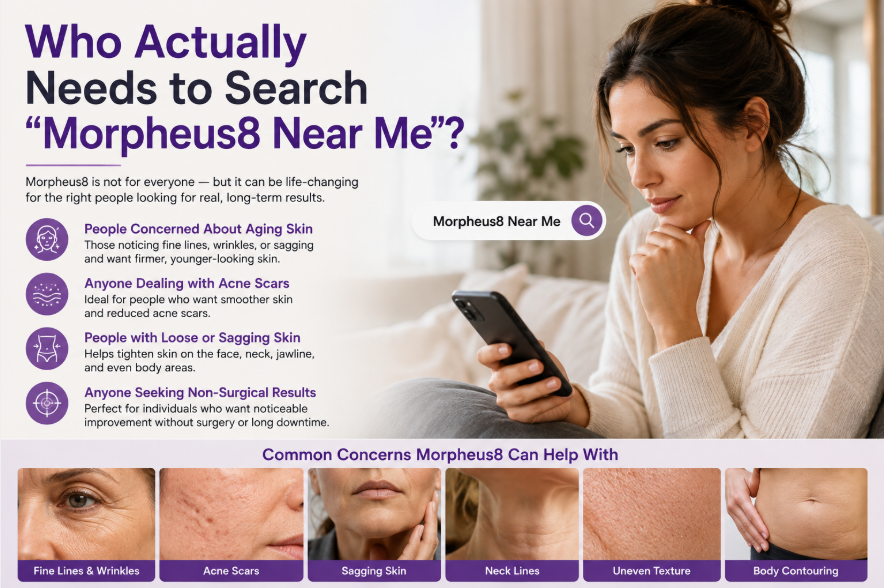
Not everyone is a good candidate, and a trustworthy clinic will tell you that during a consultation rather than push you straight into a package deal. Morpheus8 tends to work best for people who:
- Are in their late 20s to 60s with early-to-moderate skin laxity
- Want to address acne scarring that hasn’t responded to other treatments
- Are looking for a non-surgical alternative before considering a facelift
- Have realistic expectations about gradual, cumulative results
People with active skin infections, certain autoimmune conditions, or who are pregnant are usually advised to wait or avoid the treatment. This is exactly the kind of thing a real consultation should cover not something to self-diagnose from a blog post.
How to Actually Choose a Provider Nearby
This is where most “Morpheus8 near me” searches go wrong. People pick based on the lowest price or the flashiest Instagram ad, then end up disappointed or worse, with uneven results from an undertrained operator. Here’s what actually matters.
1. Check Who Is Performing the Treatment
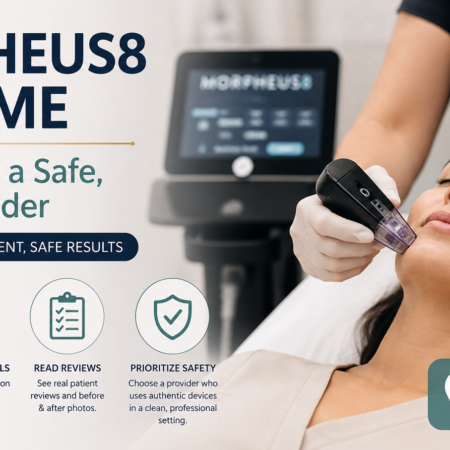
Morpheus8 is a medical device, not a spa gadget. In most states, it should be performed by a licensed provider a dermatologist, plastic surgeon, nurse practitioner, physician assistant, or a registered nurse working under physician supervision. Ask directly: “Who will be doing my treatment, and what’s their training with this specific device?”
2. Look for Real Before-and-After Photos of Their Own Patients
Stock photos from InMode’s marketing materials tell you nothing about a specific clinic’s skill. Ask to see the provider’s own patient results, ideally with similar skin tone and concerns to yours.
3. Ask About the Depth Settings and Customization
One reason results vary so much between clinics is that Morpheus8 allows for adjustable needle depth (up to 4mm in some handpieces). A skilled provider customizes depth and energy based on your treatment area and goals rather than running every patient through the same generic setting.
4. Read Recent Reviews Not Just the Star Rating
Look for reviews that mention specifics: how the provider explained aftercare, whether swelling or downtime matched expectations, and whether follow-up appointments were tracked properly.
5. Confirm It’s a Genuine Morpheus8 Device
Because Morpheus8 built a strong brand reputation, some clinics market other RF microneedling devices under similar-sounding names. If brand accuracy matters to you, ask the clinic to confirm they use the actual InMode Morpheus8 system.
What to Expect: Treatment, Downtime, and Results Timeline
| Stage | What Happens | Typical Timeframe |
|---|---|---|
| Consultation | Skin assessment, medical history review, goal-setting | 20–40 minutes |
| Numbing | Topical anesthetic applied before treatment | 30–45 minutes |
| Treatment | RF microneedling device passed over target area | 30–60 minutes |
| Initial downtime | Redness, swelling, pinpoint bleeding possible | 2–5 days |
| Full recovery | Skin returns to normal appearance | 1–2 weeks |
| Visible improvement begins | Early collagen remodeling shows | 3–4 weeks |
| Full results | Collagen production peaks | 3 months, sometimes continuing to 6 months |
Most providers recommend a series of 3 treatments spaced about 4–6 weeks apart for optimal results, with some patients returning for annual maintenance sessions.
How Much Does Morpheus8 Cost?
Pricing varies a lot depending on your location, the treatment area, and the provider’s experience level. As a general range you’ll commonly see quoted by clinics in the US:
- Face only: roughly $700–$1,500 per session
- Face and neck: roughly $1,200–$2,000 per session
- Body areas (abdomen, thighs): roughly $1,500–$3,000 per session
- Full treatment package (3 sessions): often discounted compared to booking individually
These are general ranges based on publicly available clinic pricing patterns, not a guaranteed quote. Always get written pricing directly from the clinic you’re considering, and ask whether numbing, follow-ups, and touch-ups are included.
Morpheus8 vs. Other Skin Tightening Treatments
If you’re comparing options before you commit, here’s a quick side-by-side to set expectations.
| Treatment | Downtime | Best For | Results Last |
|---|---|---|---|
| Morpheus8 | 3–5 days | Skin laxity + acne scars, combined texture and firmness | 1–3 years |
| Traditional microneedling | 1–2 days | Texture, mild scarring | 6–12 months |
| Ultherapy | Minimal | Deep tissue lifting, brow/jawline | 1–2 years |
| Botox/fillers | Minimal | Wrinkles, volume loss | 3–12 months |
| Surgical facelift | Weeks | Significant, long-term laxity correction | 5–10+ years |
None of these is objectively “better” it depends on your skin, your budget, and how much downtime you can tolerate.
ALSO READ: Best White Sneakers for Women A Buyer’s Guide That Actually Helps
Questions to Ask During Your Consultation
Before you book, a good consultation should let you ask:
- How many Morpheus8 treatments have you personally performed?
- What depth and energy settings do you typically use for my concern?
- What does aftercare look like, and what should I avoid in the first week?
- Are there any reasons I might not be a good candidate?
- What happens if I’m not satisfied with the results after the full series?
If a clinic rushes past these questions or pressures you to book same-day, that’s worth noticing.
Final Thoughts
“Morpheus8 near me” is really two questions in one: what is this treatment, and who nearby can do it safely and well. The technology itself is well-studied and FDA-cleared, but results depend heavily on the skill of the person holding the device. Take the time to vet a provider the same way you’d vet any other medical procedure because that’s exactly what this is.
FAQs
Is Morpheus8 painful?
Most clinics apply topical numbing cream beforehand, so patients typically describe the sensation as pressure or mild heat rather than sharp pain. Deeper settings on more sensitive areas can feel more intense.
How many sessions of Morpheus8 do I need?
Most providers recommend a series of 3 sessions spaced 4–6 weeks apart, followed by occasional maintenance treatments once or twice a year.
Is Morpheus8 safe for all skin tones?
Yes, one advantage of Morpheus8 over some laser treatments is that it’s generally considered safe across a wide range of skin tones, since the energy is delivered below the surface rather than through light absorption. Always confirm this directly with your provider based on your specific skin.
How long do Morpheus8 results last?
Results commonly last one to three years, depending on your age, skin condition, and lifestyle factors like sun exposure. Annual touch-ups can help maintain results.
What’s the difference between Morpheus8 and regular microneedling?
Regular microneedling only creates micro-injuries to stimulate collagen at the surface. Morpheus8 adds radiofrequency energy that also treats deeper tissue layers, making it more effective for skin laxity, not just texture.
Can I go back to work the next day after Morpheus8?
Many patients return to normal activities within a day or two, though redness and mild swelling can be visible for several days depending on the treatment intensity and area.
For more updates visit: DAILY FRONT

Other Articles





No Comment! Be the first one.