


Getting kids out the door in the morning shouldn’t feel like a battle. Yet for so many parents, mornings start with rushing, nagging, and at least one meltdown before 8 a.m. The good news? A simple morning routine for kids can turn that chaos into something calm, predictable, and even enjoyable for both you and your child.
This guide walks through what a good morning routine actually looks like, why it matters for kids’ development, and how to build one that fits your real family life, not some picture-perfect version you saw online.
Why Kids Need a Morning Routine
Children thrive on predictability. When they know what comes next, they feel more secure and are less likely to resist or stall. A consistent morning routine gives kids a sense of control over their own actions, which reduces power struggles with parents.
There’s also a practical side to this. Kids who follow a steady routine tend to:
- Get to school on time with less rushing
- Eat a proper breakfast instead of skipping it
- Start the day calmer, which affects mood and focus in class
- Build independence and responsibility over time
- Sleep better at night, since consistent mornings often support consistent bedtimes
None of this requires a rigid, military-style schedule. It just means having a clear, repeatable order of steps that everyone in the house understands.
What a Good Morning Routine for Kids Actually Includes
A solid routine covers the basics without overcomplicating things. Here’s a simple breakdown most families can adapt.
1. Wake-Up Time
Set a consistent wake-up time, even on weekends if possible. Waking up at wildly different times each day confuses a child’s internal clock and makes mornings harder, not easier.
2. Personal Hygiene
Brushing teeth, washing face, and getting dressed should happen early in the sequence, before screens or distractions enter the picture.
3. Breakfast
A child who eats breakfast tends to concentrate better and have steadier energy through the morning. Keep it simple — the goal is consistency, not a gourmet spread.
4. Bag and Outfit Prep
This step works best the night before, but if mornings are tight, a five-minute check in the morning (backpack, shoes, water bottle) prevents last-minute scrambling.
5. A Calm Transition Before Leaving
Kids do better when the last few minutes before leaving aren’t rushed. A short buffer — even five or ten minutes — for a quick chat, a hug, or just sitting quietly makes a real difference in mood.
Sample Morning Routine Chart (By Age)
Different ages need different levels of guidance. Here’s a general starting point:
| Age Group | Wake-Up to Ready Time | Parent Involvement | Example Tasks |
|---|---|---|---|
| 2–4 years | 45–60 minutes | High | Getting dressed with help, simple hygiene, guided breakfast |
| 5–8 years | 30–45 minutes | Moderate | Following a visual chart, brushing teeth independently, packing easy items |
| 9–12 years | 20–30 minutes | Low | Managing their own schedule with reminders, preparing their own breakfast |
These are general ranges, not fixed rules — every child moves at their own pace, and that’s completely normal.
How to Build a Routine Your Kids Will Actually Follow
Involve Your Child in Creating It
Kids are far more likely to stick to a routine they helped design. Ask them what order they’d like to do things in, or let them pick their own breakfast options from a short list you approve.
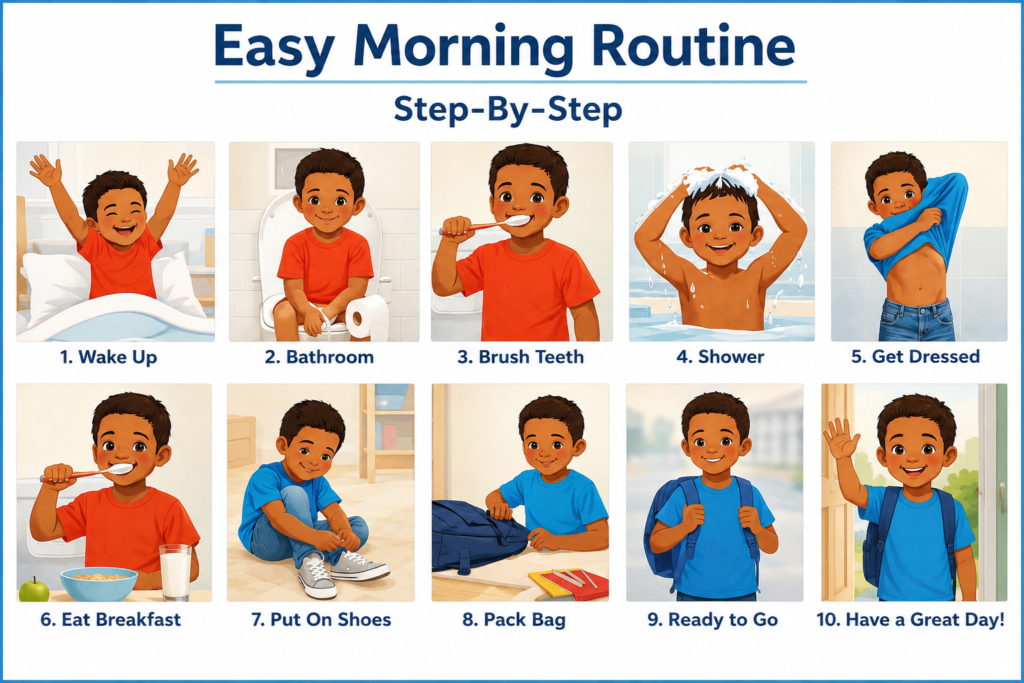
Use a Visual Chart
For younger children especially, a simple picture chart — brushing teeth, getting dressed, eating breakfast — works better than verbal reminders. It shifts the responsibility from “mom or dad telling me” to “checking the chart myself.”
Keep It the Same Every Day
Routines lose their power when they change constantly. Aim for the same sequence daily, with small flexibility for weekends or special days.
Prepare the Night Before
This is one of the most effective habits for smoother mornings. Laying out clothes, packing bags, and deciding on breakfast the night before removes several decision points from the morning itself.
Avoid Screens Until Everything Is Done
Screens are one of the biggest morning routine disruptors. A child who turns on a tablet before getting dressed often forgets everything else. Save screen time, if any, for after the routine is complete — or skip it in the morning altogether.
Praise Progress, Not Perfection
Some mornings won’t go smoothly, and that’s fine. Focus on encouraging the effort your child puts in rather than expecting flawless execution every single day.
Read More: Coffee Table Decor Ideas That Actually Make a Room Feel Finished
Common Mistakes Parents Make With Morning Routines
- Making the routine too long or complicated. If there are ten steps to remember, most kids (and parents) will lose track.
- Changing the routine too often. Consistency is what makes it work; constant changes confuse the pattern.
- Doing everything for the child. It’s tempting to just dress them yourself to save time, but this slows down their independence long-term.
- Skipping breakfast on rushed days. Even a quick option like a banana or a piece of toast is better than nothing.
- Not accounting for individual pace. Some kids are naturally slower in the morning — building in extra time avoids daily frustration.
Realistic Expectations: It Won’t Be Perfect Every Day
It’s worth being honest here no routine eliminates every rough morning. Kids get sick, moody, or simply have off days, just like adults do. The goal of a morning routine isn’t zero conflict; it’s fewer conflicts, faster resolution, and a general sense of “we know what we’re doing” in the household.
If a routine isn’t working after a couple of weeks, it usually means one of two things: it’s too rigid for your child’s temperament, or it’s not specific enough for them to follow independently. Adjusting it based on what you observe is part of the process, not a sign of failure.
Conclusion
A solid morning routine for kids isn’t about perfection or turning your household into a schedule-obsessed machine. It’s about giving children a predictable structure that helps them feel secure, capable, and ready for the day while giving parents a little more peace before the rush of school and work begins. Start small, involve your child in the planning, stay consistent, and adjust as needed. Over time, what feels like a daily struggle can genuinely become one of the calmer parts of your day.
FAQs
1. What age should a child start having a morning routine?
Most children can begin following a simple routine, especially with visual charts, from around age 2 or 3. The complexity should grow as the child gets older.
2. How long should a kid’s morning routine take?
It depends on age, but generally 20 to 45 minutes from wake-up to being fully ready works for most children, not counting travel time.
3. What if my child refuses to follow the routine?
Try involving them in building it, using a visual chart, and offering small choices within the routine (like which shirt to wear). Refusal often decreases when kids feel some control.
4. Should screens be part of a morning routine?
It’s best to avoid screens until the full routine is finished, since screen time tends to distract kids from completing other tasks.
5. Is it bad if our morning routine changes on weekends?
A little flexibility on weekends is fine for most families. The key is keeping weekday routines consistent, since that’s when timing matters most.
6. How can I make mornings easier without yelling?
Preparing the night before, using visual reminders instead of verbal ones, and giving time buffers for slower-moving kids all reduce the need for rushing and raised voices.
For more updates visit: Daily Front

Other Articles





[…] Also Read: Morning Routine for Kids A Stress-Free Plan That Actually Works […]