


Finding foods that are both filling and nutritious can make healthy eating much easier. High fiber high protein foods are especially useful because protein helps support muscles and keeps meals satisfying, while fibre supports healthy digestion and helps you feel full for longer.
From lentils and chickpeas to Greek yoghurt, eggs and oats, there are plenty of simple choices available in the UK. You do not need unusual ingredients or complicated recipes to increase your intake. A few smart food combinations can turn everyday meals into more balanced and satisfying options.
What Are High Fiber High Protein Foods?
High fiber high protein foods provide meaningful amounts of both nutrients in the same serving. Fibre is mainly found in plant foods such as beans, lentils, whole grains, vegetables, fruits, nuts and seeds. Protein comes from foods including pulses, dairy products, eggs, fish, meat, nuts and seeds.
Some foods naturally contain both nutrients, while others work better when combined. For example, lentils provide both plant protein and fibre, while adding seeds to Greek yoghurt can increase the overall fibre and protein content of a meal.
Eating a mixture of these foods can help create meals that are more satisfying and nutritionally varied.
Why Fibre and Protein Matter
Protein is an important nutrient for maintaining and repairing body tissues. It is also involved in many processes throughout the body. Including a source of protein in meals can help make them more satisfying.
Fibre supports normal bowel function and contributes to digestive health. Different types of fibre have different effects, so eating a variety of fibre-rich foods is useful.
When protein and fibre appear together in a meal, they can create a satisfying combination that may help reduce the temptation to snack soon after eating.
Best High Fiber High Protein Foods
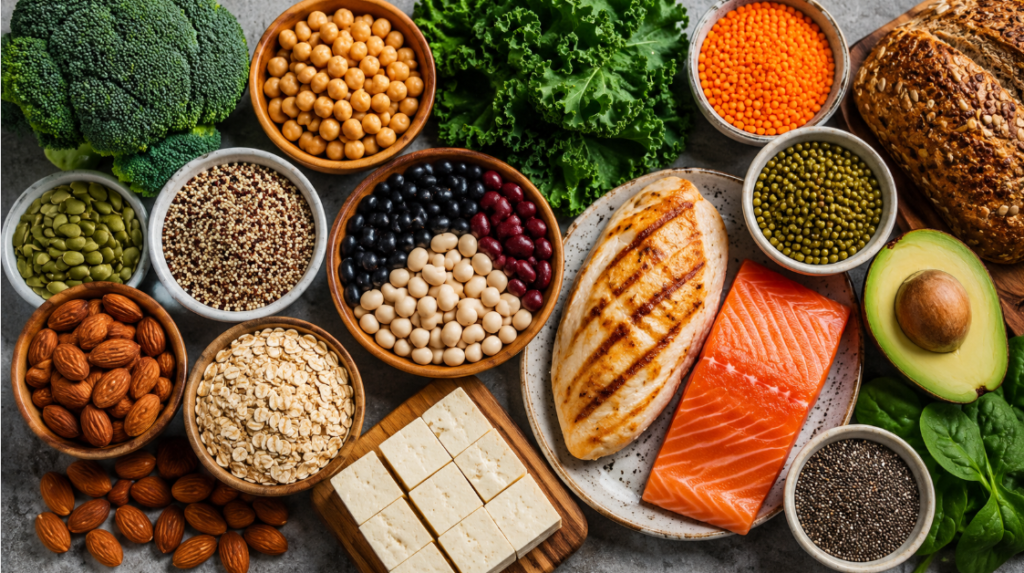
Lentils
Lentils are one of the easiest high fiber high protein foods to add to a regular diet. They are versatile, affordable and suitable for soups, curries, salads and stews.
Red, green and brown lentils can all be useful choices. They also provide other nutrients, making them a practical staple for plant-based meals.
Chickpeas
Chickpeas contain both protein and fibre and can be used in many different dishes. They work well in hummus, salads, curries and roasted snacks.
Adding chickpeas to a meal can also make it more substantial without relying heavily on processed ingredients.
Black Beans and Other Beans
Beans are another excellent source of plant-based protein and fibre. Kidney beans, black beans, cannellini beans and butter beans can all add texture and nutrition to meals.
Try adding beans to chilli, soups, grain bowls or salads. Canned beans can be particularly convenient when rinsed and added directly to a meal.
Oats
Oats are better known as a breakfast food, but they can be used in several ways. They contain fibre, including beta-glucan, and also provide some protein.
For a more balanced breakfast, combine oats with Greek yoghurt, milk, nuts or seeds. Adding fruit can provide extra fibre and flavour.
Greek Yoghurt
Greek yoghurt is naturally high in protein and can make a useful base for breakfast or snacks. However, most dairy yoghurt contains little fibre.
Pairing Greek yoghurt with berries, oats, chia seeds or ground flaxseed can create a meal with both protein and fibre.
Eggs
Eggs are a convenient source of protein and can be used for breakfast, lunch or dinner. They contain little fibre, so pair them with vegetables, wholegrain toast, beans or avocado for a more fibre-rich meal.
An omelette filled with vegetables or eggs served with beans and wholegrain toast can be a simple, satisfying option.
Chia Seeds
Chia seeds are small but contain a useful combination of fibre, protein and healthy fats. They can be mixed into yoghurt, porridge or overnight oats.
Because chia seeds absorb liquid, they are often used in puddings and other breakfast recipes. Starting with a modest amount can make it easier to increase fibre gradually.
Flaxseeds
Ground flaxseeds provide fibre, plant protein and healthy fats. They can be stirred into porridge, yoghurt or smoothies.
Ground flaxseed is generally easier to use in meals than whole seeds. Keep portions sensible and drink enough fluid as you increase your fibre intake.
Quinoa
Quinoa is a protein-containing whole grain that can be used instead of rice or couscous. It also provides fibre and can form the base of salads and warm meals.
Combining quinoa with beans, vegetables and seeds can create a particularly nutrient-dense meal.
Nuts and Nut Butters
Almonds, peanuts, pistachios and other nuts provide protein, fibre and unsaturated fats. They can make a convenient addition to breakfast or snacks.
Choose options without excessive added sugar or salt when possible. Nut butter can be spread on wholegrain toast or stirred into porridge for extra flavour and nutrition.
Easy Ways to Eat More Fibre and Protein
Breakfast is an easy place to start. Oats topped with Greek yoghurt, berries and chia seeds provide several sources of fibre and protein in one bowl.
At lunch, try a bean and vegetable soup, lentil salad or chickpea-based meal. Adding whole grains can provide more fibre while making the meal more satisfying.
Dinner can be built around a protein source alongside vegetables and a fibre-rich carbohydrate. Lentils, beans, whole grains and vegetables can all fit into a balanced meal.
Snacks can also include combinations such as yoghurt with seeds, fruit with nuts or wholegrain toast with peanut butter. The goal is variety rather than relying on one particular food.
How Much Fibre and Protein Do You Need?
Nutritional needs vary depending on factors such as age, body size, activity levels and overall health. In the UK, adults are generally advised to aim for around 30g of fibre per day.
Protein requirements can also vary. Rather than focusing on one food or a single number, aim to include protein-rich foods across your meals while eating a varied diet.
If you have specific dietary requirements or a medical condition, a qualified healthcare professional or registered dietitian can provide personalised advice.
Tips for Increasing Fibre Safely
If your current diet is low in fibre, increase it gradually rather than making a sudden change. A rapid increase can cause bloating or digestive discomfort for some people.
Drink plenty of fluids and introduce more vegetables, fruit, pulses and whole grains over time. This allows your digestive system to adjust more comfortably.
It is also useful to choose a variety of fibre sources instead of relying on one food. Different plant foods provide different types of fibre and other beneficial nutrients.
High Fiber High Protein Foods for Different Diets
People following a vegetarian diet have many options, including lentils, beans, chickpeas, Greek yoghurt, eggs, tofu, quinoa, nuts and seeds.
For a vegan diet, pulses, tofu, tempeh, soya products, whole grains, nuts and seeds can provide useful combinations of protein and fibre. Eating a varied diet is important to obtain a broad range of nutrients.
For people who eat meat or fish, adding plant foods alongside lean protein can increase the fibre content of meals. Chicken, fish or eggs can be paired with beans, vegetables and whole grains for a balanced plate.
Conclusion
High fiber high protein foods can make everyday meals more filling, nutritious and varied. Lentils, chickpeas, beans, oats, quinoa, seeds, nuts and dairy foods are all practical choices, while eggs, meat and fish can be combined with fibre-rich plant foods.
The easiest approach is to build meals around a variety of whole and minimally processed foods. Increase fibre gradually, stay hydrated and choose different protein and fibre sources throughout the week. With simple changes, eating more fibre and protein can become a natural part of a balanced diet.
FAQs
What are the best high fiber high protein foods?
Lentils, beans, chickpeas, quinoa, chia seeds, flaxseeds, oats and nuts are useful high fiber high protein foods. Greek yoghurt and eggs can also be paired with fibre-rich foods to create balanced meals.
What food is high in both protein and fibre?
Lentils and beans are among the most useful foods containing both protein and fibre. Chickpeas, quinoa, chia seeds and some other pulses, grains and seeds can also contribute both nutrients.
Are eggs high in fibre and protein?
Eggs are a good source of protein but contain virtually no fibre. Pairing eggs with vegetables, beans or wholegrain toast can increase the fibre content of the meal.
Are oats high in protein and fibre?
Oats provide both fibre and some protein. Combining them with Greek yoghurt, milk, nuts or seeds can make breakfast higher in protein and fibre.
Are high fiber high protein foods good for breakfast?
Yes. Foods such as oats, Greek yoghurt, berries, chia seeds, nuts and eggs can form nutritious breakfast combinations that provide protein and fibre.
What are good high fiber high protein foods for vegetarians?
Vegetarians can choose lentils, chickpeas, beans, Greek yoghurt, eggs, quinoa, tofu, nuts and seeds. Combining different foods can make it easier to create varied meals.
For more updates visit: DAILY FRONT

Other Articles

High Fiber Foods for Dogs: Safe Choices & Tips
How Much Does CaseOh Weigh? Breaking Down the Real Numbers


No Comment! Be the first one.