


It’s 7:15 AM. Someone can’t find their left shoe. The toast is burning. And you’ve already said “hurry up” four times before anyone’s even had breakfast.
If this sounds familiar, you’re not doing anything wrong most families never sat down and designed their mornings. They just happened, one rushed day at a time. A good school morning routine isn’t about waking up earlier or moving faster. It’s about removing the small decisions and delays that pile up into chaos.
This guide walks through what actually makes school mornings smoother, based on how routines work for kids at different ages, what teachers and pediatric sleep specialists commonly recommend, and what tends to go wrong even in well-meaning households.
What Is a School Morning Routine?
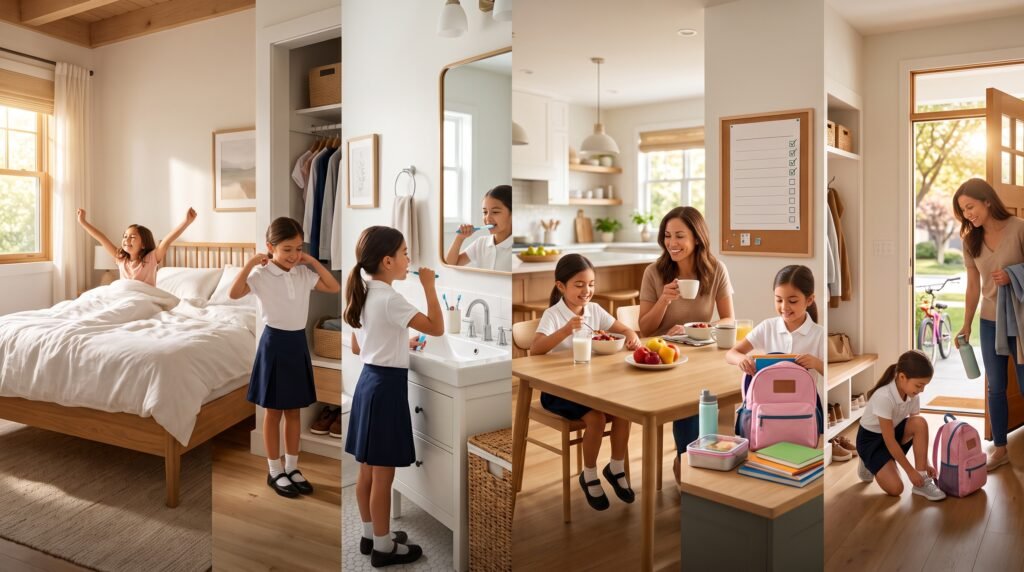
A school morning routine is a repeated sequence of tasks — waking up, getting dressed, eating, and leaving — done in roughly the same order every school day. The goal isn’t rigid perfection. It’s predictability. When kids (and parents) know what comes next, there’s less negotiating, less nagging, and less last-minute scrambling.
Research on child development consistently shows that predictable routines reduce anxiety in children and support better emotional regulation. Mornings are often the most rushed part of the day, which makes them the part most in need of structure.
Why Mornings Fall Apart (Even With Good Intentions)
Most chaotic mornings share the same few root causes:
- Decisions made in the moment. Choosing an outfit, finding a permission slip, or deciding what’s for breakfast — all at 7 AM — eats up time and energy.
- Not enough sleep the night before. A late bedtime almost always shows up as a rough morning.
- No visual structure for kids. Young children especially struggle to hold a mental checklist; they need to see the steps.
- Screens too early. Even five minutes of a tablet can derail the next twenty.
- Parents doing tasks kids could do themselves, which creates a bottleneck where everything waits on one adult.
The fix for almost all of these is preparation the night before, plus a simple, visible structure in the morning.
Building a School Morning Routine: Step by Step
1. Start the Routine the Night Before
The most effective morning routines actually begin at bedtime. Laying out clothes, packing the school bag, signing forms, and prepping lunch the night before removes a huge chunk of morning decision-making.
A simple nightly checklist for kids (even a 6-year-old can manage this):
- Backpack packed and by the door
- Clothes picked out and laid on a chair
- Shoes paired and ready
- Lunch made or lunch money set aside
2. Set a Consistent Wake-Up Time
Bodies run on rhythm. Waking up at the same time every school day — including most weekends, ideally within an hour — helps regulate a child’s internal clock, making mornings less groggy over time.
The American Academy of Pediatrics recommends the following sleep ranges by age, which directly affect how easy or hard mornings will be:
| Age Group | Recommended Sleep (per 24 hrs) |
|---|---|
| Preschool (3–5 yrs) | 10–13 hours |
| School-age (6–12 yrs) | 9–12 hours |
| Teens (13–18 yrs) | 8–10 hours |
If a child is genuinely hard to wake up every day, it’s often a sleep timing issue, not a laziness issue.
3. Use a Visible Routine Chart
For younger kids, a simple picture or checklist chart (brush teeth, get dressed, eat breakfast, pack bag) works far better than verbal reminders. It shifts the responsibility from “parent nagging” to “kid checking off a list,” which builds independence.
For older kids and teens, a phone reminder or a whiteboard with the week’s schedule can serve the same purpose.
4. Build in Buffer Time
Most morning stress comes from routines that are timed too tightly — with zero room for a missing shoe or a spilled cereal bowl. Add 10–15 minutes of buffer before you actually need to leave. That buffer is what keeps one small hiccup from becoming a full meltdown.
5. Keep Breakfast Simple and Non-Negotiable
Breakfast doesn’t need to be elaborate, but it should be quick to prepare and consistent. Rotating a short list of 3–4 easy options (overnight oats, toast with peanut butter, yogurt and fruit, eggs) removes the “what do you want to eat” debate every single day.
6. Delay Screens Until After the Routine Is Done
Letting kids check a tablet or phone before school tends to slow everything down, not speed it up. A common approach that works well: no screens until shoes are on and the bag is packed.
Sample School Morning Routine by Age
| Time | Younger Child (5–8 yrs) | Older Child / Teen (12–17 yrs) |
|---|---|---|
| Wake up | 6:45 AM | 6:30 AM |
| Get dressed (clothes pre-laid out) | 6:50 AM | 6:40 AM |
| Breakfast | 7:00 AM | 6:50 AM |
| Brush teeth / hygiene | 7:15 AM | 7:10 AM |
| Final bag/shoe check | 7:25 AM | 7:25 AM |
| Leave for school | 7:35 AM | 7:35 AM |
Adjust these times based on your actual commute or bus schedule — the structure matters more than the exact clock times.
People can also read this: Weighted Vest for Walking Benefits What Really Works
Common Mistakes Parents Make
- Trying to change everything at once. Introduce one or two new habits at a time (like laying out clothes the night before), rather than overhauling the whole morning in a week.
- Rewarding speed over the routine. Rushing a child through steps teaches them to cut corners, not to build a habit.
- Inconsistent weekday/weekend schedules. Big swings in wake-up time (like sleeping in three extra hours on weekends) can undo the week’s progress on sleep rhythm.
- Over-relying on reminders instead of systems. If a parent has to say “get dressed” every single day, that’s a sign the routine needs a visual cue instead of a verbal one.
When a Routine Still Isn’t Working
If mornings stay difficult even after weeks of a consistent routine, it may be worth considering other factors — anxiety about school, an undiagnosed sleep issue, or a schedule that’s simply too tight for the household’s real pace. In these cases, a conversation with your child’s teacher, school counselor, or pediatrician can help identify what a checklist alone can’t fix.
Final Thoughts
A smooth school morning routine isn’t about willpower or waking up an hour earlier — it’s about shifting decisions to the night before and giving kids a visible, repeatable structure to follow. Start small: pick one change, keep it consistent for two weeks, and build from there. The goal isn’t a perfect morning every day. It’s a routine that makes most mornings calmer than they used to be.
FAQs
What time should kids wake up for school?
Most school-age children do well waking up 45–60 minutes before they need to leave, giving enough time for dressing, breakfast, and hygiene without rushing. The exact time depends on your child’s bedtime and how much sleep they need for their age.
How can I get my child to wake up without a fight?
Consistent bedtimes and wake times, even on weekends, make waking up easier over time. Sudden, jarring wake-ups are often a sign the child isn’t getting enough sleep the night before.
What should be included in a morning checklist for kids?
A basic checklist usually covers: getting dressed, eating breakfast, brushing teeth, packing the school bag, and putting on shoes. Younger kids benefit from a picture-based chart; older kids can use a written list or phone reminder.
How do I stop mornings from feeling rushed?
Prepare as much as possible the night before clothes, lunch, and bags and build in 10–15 minutes of buffer time in the morning schedule so small delays don’t cause a full-blown rush.
Should kids use screens in the morning before school?
It’s generally better to hold off on screens until the routine is finished (dressed, fed, bag packed), since screen time tends to slow children down rather than help them move faster.
How long does it take to build a new morning routine?
Most families see a new routine start to feel natural within two to three weeks of consistent practice. Introducing one change at a time, rather than overhauling everything at once, tends to work better long-term.
For more updates visit: DAILY FRONT

Other Articles

Spring Cleaning Tips That Actually Work in 2026
15 Kitchen Counter Decor Ideas That Actually Work





[…] ALSO READ: The School Morning Routine That Actually Works (No More Yelling) […]