


Strap on a weighted vest and go for a walk that’s the promise all over social media right now. Stronger bones. More muscle. weighted vest for walking benefits Faster fat loss. Better posture. It sounds almost too good to be true for something so simple.
So here’s the honest question worth asking before you buy one: does the science actually back this up, or is it another fitness trend that’s outrunning the research?
The real answer sits somewhere in the middle. A weighted vest can genuinely make your regular walk more challenging, and that has real value. But some of the boldest claims floating around especially about bone density and muscle building are ahead of what current research actually shows. This article breaks down what’s proven, what’s still uncertain, and how to use a weighted vest safely if you decide to try one.
What Is a Weighted Vest, and How Does It Work for Walking?
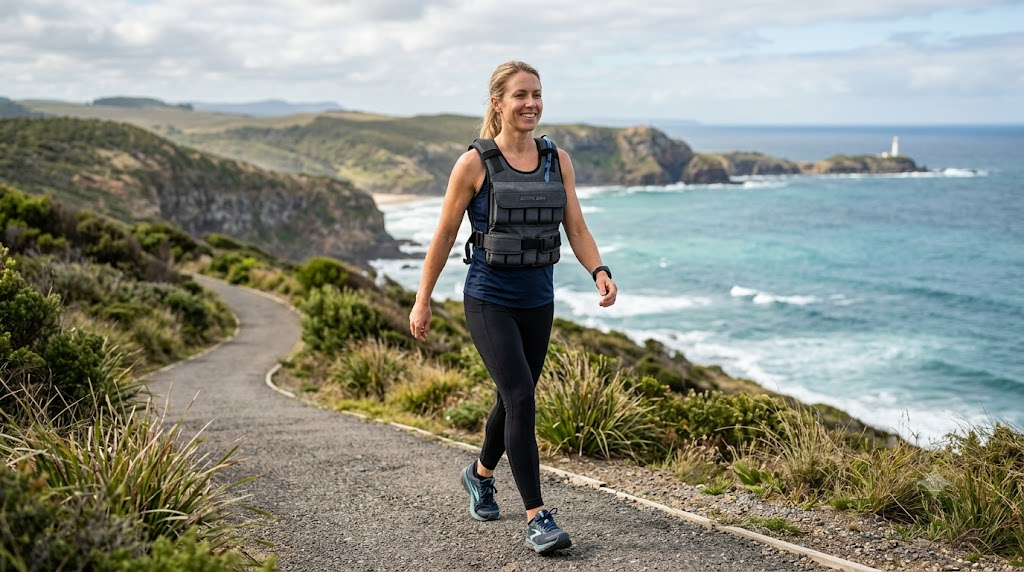
A weighted vest is a fitted garment with small pockets or pouches that hold weighted inserts, usually ranging from 2 to 20+ kilograms (about 5 to 45 pounds). You wear it over your torso, distributing the extra load evenly across your chest and back instead of carrying it in your hands or on your shoulders like a backpack.
When you walk with added weight, your body has to work a bit harder to move the same distance. Your heart rate climbs slightly faster, your leg and core muscles fire more, and your calorie burn goes up compared to walking at the same pace without the vest. That part is simple physics and isn’t controversial.
Where things get more complicated is in the bigger claims: does that extra effort translate into meaningfully stronger bones or bigger muscles over time? That’s the part we need to look at carefully.
The Real, Well-Supported Benefits
1. A Slightly Higher Calorie Burn
Adding weight to your body increases the energy cost of walking. If you wear a vest that’s around 5–10% of your body weight, you’ll burn modestly more calories over the same walk compared to going vest-free. It’s not a dramatic difference, but for someone trying to nudge their daily activity level up without changing their route or time, it can help.
2. More Engaged Core and Leg Muscles
Carrying extra load through your torso means your core, hips, and legs have to stabilize more with every step. Regular walkers who add a vest often notice their glutes and lower back working harder, especially on inclines or stairs. This can complement though not replace dedicated strength training.
3. Cardiovascular Challenge Without Changing Pace
For people who find their usual walking pace “too easy” but don’t want to jog, a weighted vest is one way to raise your heart rate and breathing effort while staying at a walking pace. This is genuinely useful for building cardiovascular fitness gradually, particularly for older adults or people returning to exercise after time off.
4. It Can Make You More Consistent
This might be the most underrated benefit. If a weighted vest makes your walks feel more purposeful — like an actual workout instead of just a stroll — and that keeps you walking regularly, the consistency itself is valuable. Regular movement of any kind supports heart health, mood, and mobility.
Where the Evidence Gets Shaky: Bones and Muscle
This is the part most articles skip over, and it matters.
Social media is full of claims that <strong>weighted vest walking benefits</strong> include stronger bones and increased muscle mass, especially for women in perimenopause and menopause. Some of this traces back to real studies from the early 2000s, where older adults who wore weighted vests during structured exercise programs often involving stair climbing or strength training, not just walking showed improvements in leg muscle power and, in a couple of cases, modest gains in hip bone density.
But more recent, larger research paints a more cautious picture. A major study from Wake Forest University, published in JAMA Network Open, specifically tested weighted vest use during weight loss and found it didn’t meaningfully protect bone mass the way many people assumed it would. Exercise scientists who’ve reviewed the broader body of research point out that walking itself — vest or no vest — doesn’t create enough mechanical force on bones to significantly change bone density. Running, jumping, and heavy resistance training create far more skeletal loading than walking does, even with 10–20 extra pounds strapped on.
In plain terms: adding a vest to your walk increases the load by roughly the weight you add, but that’s usually not enough of a jump to meaningfully stress your bones the way high-impact activity does.
Also Read: Morning Routine for Kids A Stress-Free Plan That Actually Works
What This Means for You
- If your main goal is bone health, a weighted vest walk is not a proven substitute for resistance training or higher-impact exercise like jogging or jump training (done safely and appropriately for your fitness level).
- If your goal is general fitness, calorie burn, or making walks feel more effective, a weighted vest can still be a reasonable, low-tech tool.
- Don’t expect a weighted vest walk alone to reverse bone density loss — the current evidence doesn’t support that as a guarantee.
Weighted Vest Walking: Claims vs. Current Evidence
| Common Claim | What the Evidence Actually Shows |
|---|---|
| Burns more calories | Supported — modestly higher energy cost with added load |
| Strengthens leg and core muscles | Partially supported — more muscular engagement during the walk itself |
| Builds significant new muscle mass | Not well supported — walking, even weighted, isn’t strong enough stimulus for real muscle growth |
| Increases bone density | Weak/mixed evidence — walking doesn’t load bones enough; older studies mixed vests with other exercise |
| Improves cardiovascular fitness | Supported — raises heart rate and effort at the same walking pace |
| Improves posture | Anecdotal — no strong controlled research confirms this specifically |
How to Use a Weighted Vest Safely
If you decide to try one, a few practical guidelines can help you avoid strain or injury:
- Start light. Many trainers suggest beginning around 5% of your body weight and increasing gradually only after your body adapts.
- Choose a well-fitted vest. The weight should sit close to your torso, not bounce or shift, since a loose vest can throw off your posture and gait.
- Avoid wearing it for hours at a time. Long, extended wear — like running errands all day in a vest — can lead to fatigue, joint strain, and poor posture rather than benefit.
- Skip it if you have neck, back, shoulder, or joint issues, unless your doctor or physical therapist has specifically cleared you.
- Don’t use it for high-impact or complex movements like running, jumping, or sudden direction changes unless you’re experienced and supervised, since the added weight increases fall and injury risk.
- Check with a healthcare provider first if you’re pregnant, have osteoporosis, cardiovascular conditions, or recent injuries.
Who Might Benefit Most
- People who’ve plateaued with regular walking and want a low-cost way to add intensity without changing their route or pace.
- Older adults with a doctor’s clearance looking to add gentle resistance to daily movement.
- Busy people who want to combine light strength stimulus with cardio during the same walk.
Who Should Be Cautious
- Anyone with existing back, hip, knee, or neck problems.
- Beginners who haven’t built a walking habit yet — start with just walking first, then consider adding weight later.
- Anyone expecting a weighted vest alone to replace strength training for bone or muscle health.
Conclusion
A weighted vest can be a useful, simple way to add a bit more challenge to your walks — more calories burned, more muscular engagement, and a bit of extra cardiovascular effort, all without changing your route or pace. That’s real and worth something.
But it’s not a shortcut to significantly stronger bones or major muscle gains, despite what a lot of social media posts suggest. The current research is more cautious than the marketing. If bone health or muscle building is your main goal, pair walking with proper resistance training, and talk to a doctor or physical therapist about what’s appropriate for your body. Used sensibly, a weighted vest is a helpful addition to an active lifestyle — just not a magic fix.
FAQs
Is walking with a weighted vest actually good for you?
Yes, for most healthy adults it’s a safe way to add intensity to a walk, increasing calorie burn and muscular effort. It’s not proven to significantly boost bone density on its own.
How much weight should I use in a weighted vest for walking?
Many trainers recommend starting around 5% of your body weight and increasing gradually as your body adapts, up to around 10% for more experienced users.
Can a weighted vest replace strength training?
No. Walking with a vest adds some resistance, but it doesn’t provide the progressive overload needed for meaningful muscle growth the way structured strength training does.
Does a weighted vest help with weight loss?
It can modestly increase calorie burn during walks, which may support weight loss as part of an overall healthy diet and activity routine, but it’s not a standalone weight-loss solution.
Is it safe to wear a weighted vest every day?
Wearing one for walks a few times a week is generally fine for healthy adults, but wearing it for extended periods throughout the day isn’t recommended, as it can cause fatigue and posture issues.
Do weighted vests help with menopause-related bone loss?
Some early research showed modest bone benefits when vests were combined with structured exercise programs, but larger recent studies haven’t confirmed strong bone density benefits from vest walking alone. Speak with your doctor about proven options for bone health during menopause.
For more updates visit: Daily Front

Other Articles






[…] People can also read this: Weighted Vest for Walking Benefits What Really Works […]
[…] chi walking is a slow, mindful stepping pattern borrowed from traditional tai chi forms. Instead of walking at a normal pace, you shift your body weight fully onto one leg, place the […]
[…] the concept extends far beyond basic heartbeats. It describes dynamic systems in biological bodies, mechanical networks, and environmental fluid dynamics. Understanding how these rhythmic forces […]